
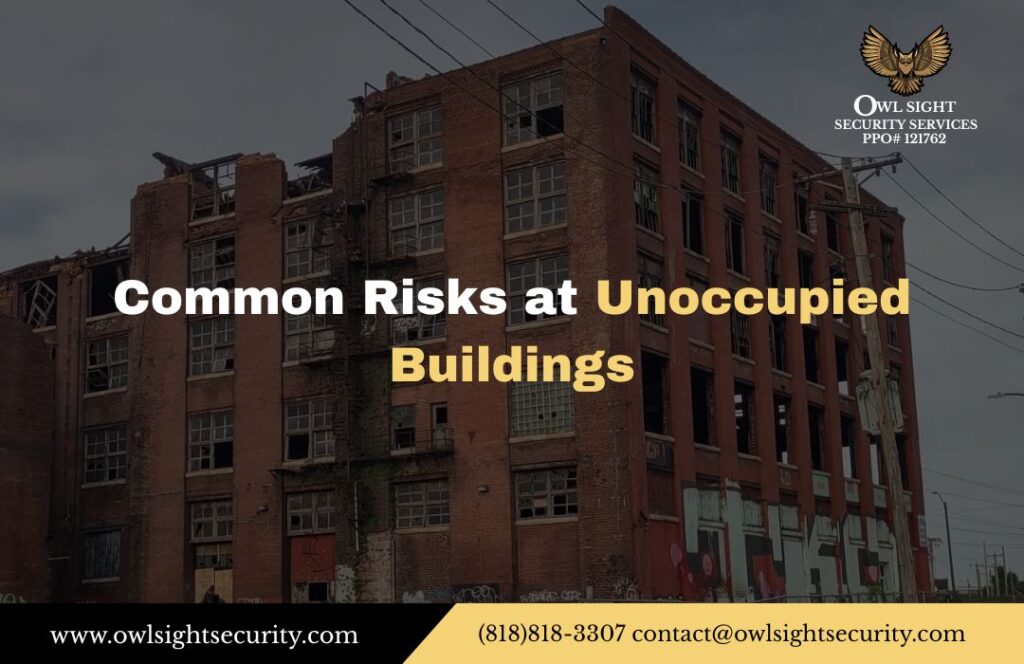
Unoccupied buildings present a unique set of security challenges that are often underestimated. Whether a property is vacant due to renovation, sale, tenant turnover, or long-term closure, the absence of daily activity makes it an easy target for unauthorized access and damage. Without proper oversight, small issues can escalate quickly and lead to costly repairs, liability concerns, and prolonged downtime.
Understanding the most common risks associated with vacant properties is essential for owners, managers, and investors who want to protect their assets. This article outlines the primary threats unoccupied buildings face and explains why professional security coverage plays a critical role in reducing exposure.
Why Vacant Properties Attract Unwanted Activity
Vacant buildings are attractive because they appear unmonitored. When lights are off, entrances are unsecured, and there is no visible presence, unauthorized individuals often assume they can enter without consequence.
These properties may be targeted by trespassers, vandals, or individuals looking for shelter. Over time, repeated access can lead to property damage, safety hazards, and neighborhood complaints. Once a building gains a reputation for being unprotected, activity often increases rather than decreases.
Visible oversight is one of the most effective deterrents for vacant properties, particularly in urban and high-traffic areas.
Trespassing and Unauthorized Access
One of the most immediate risks at unoccupied buildings is unauthorized entry. Open doors, broken windows, or unsecured gates provide easy access, even if unintentionally.
Once inside, trespassers may damage interior spaces, tamper with utilities, or create unsafe conditions. In some cases, unauthorized occupants may remain on-site for extended periods, increasing the risk of fire hazards, structural damage, and legal complications.
Preventing unauthorized access requires more than physical barriers. Regular monitoring and enforcement are essential to keeping vacant properties secure.
Vandalism and Property Damage
Vacant buildings are frequent targets for vandalism. Graffiti, broken fixtures, damaged doors, and defaced walls can occur quickly, especially when there is no visible deterrent.
These incidents not only increase repair costs but can also affect surrounding properties and community perception. Repeated vandalism may also violate local ordinances or insurance requirements, creating additional financial pressure on property owners.
Consistent security presence helps deter vandalism and allows for faster response when suspicious activity is detected.
Theft of Materials and Equipment
Unoccupied properties often contain valuable materials, tools, or infrastructure components that can be targeted for theft. Copper wiring, plumbing fixtures, appliances, and construction materials are especially vulnerable.
Theft from vacant buildings can delay projects, increase insurance claims, and lead to costly replacements. In many cases, stolen materials are not discovered until significant damage has already occurred.
Professional security guards for unoccupied buildings help reduce theft by maintaining visibility, monitoring access points, and responding quickly to suspicious behavior.
Fire Hazards and Safety Risks
Vacant buildings face an increased risk of fire due to unauthorized access, illegal activity, or neglected maintenance issues. Tampering with electrical systems, use of open flames, or damaged wiring can create dangerous conditions.
Without regular oversight of fire watch guards, small hazards can go unnoticed until they result in serious damage. Fire incidents at vacant properties often spread quickly and may impact neighboring buildings.
Active monitoring and regular patrols help identify hazards early and reduce the likelihood of major incidents.
Liability and Legal Exposure
Property owners remain legally responsible for vacant buildings. Injuries, accidents, or illegal activity occurring on-site can result in lawsuits, fines, or insurance complications.
Slip-and-fall incidents, unsafe structures, or unauthorized occupancy all increase liability exposure. Even when a building is not in use, owners are expected to take reasonable steps to prevent harm.
Maintaining documented security coverage demonstrates due diligence and helps protect owners from unnecessary legal risk.
Common Risks Property Owners Overlook
Some risks are less obvious but equally damaging when left unaddressed. Frequently overlooked risks at unoccupied buildings include:
- Secondary entrances or rear access points left unsecured
- Lack of routine inspections and patrol documentation
- Delayed response to alarms or reported activity
- Utility tampering or unauthorized power usage
- Gradual deterioration caused by unnoticed damage
Addressing these issues requires consistent oversight rather than periodic checks.
Why Professional Security Is More Effective Than Periodic Checks
Many property owners rely on occasional visits or remote monitoring to protect vacant buildings. While these methods provide limited coverage, they often fail to deter determined activity.
Professional security coverage provides a consistent presence, real-time response, and accountability. Guards conduct patrols, verify access points, and document conditions during each shift. This level of oversight significantly reduces the likelihood of ongoing issues.
For properties in higher-risk areas, security services for unoccupied buildings in Los Angeles are essential, given the city’s high population density and increased foot traffic.
Choosing the Right Security Partner for Vacant Properties
Not all security providers are equipped to handle vacant property protection. This type of coverage requires attention to detail, reliability, and clear reporting.
A qualified provider should conduct a site assessment, identify vulnerabilities, and recommend coverage based on risk rather than assumptions. Regular reporting and communication ensure that property owners stay informed and can address issues promptly.
Owl Sight Security Services provides structured security solutions for vacant properties, focusing on visibility, consistency, and professional oversight. This approach helps protect assets while minimizing disruption and long-term costs.
Frequently Asked Questions
Why are vacant buildings more vulnerable than occupied ones?
Vacant buildings lack daily activity and oversight, making them easier targets for trespassing, vandalism, and theft.
Is security necessary if a building is only temporarily unoccupied?
Yes, even short periods of vacancy can attract unauthorized activity, especially if the property appears unattended.
Can security guards help with insurance requirements?
Yes, documented security coverage may help meet insurance expectations and demonstrate due diligence.
What types of properties benefit most from vacant property security?
Commercial buildings, residential developments, construction sites, and properties awaiting sale or renovation all benefit from professional security coverage.