

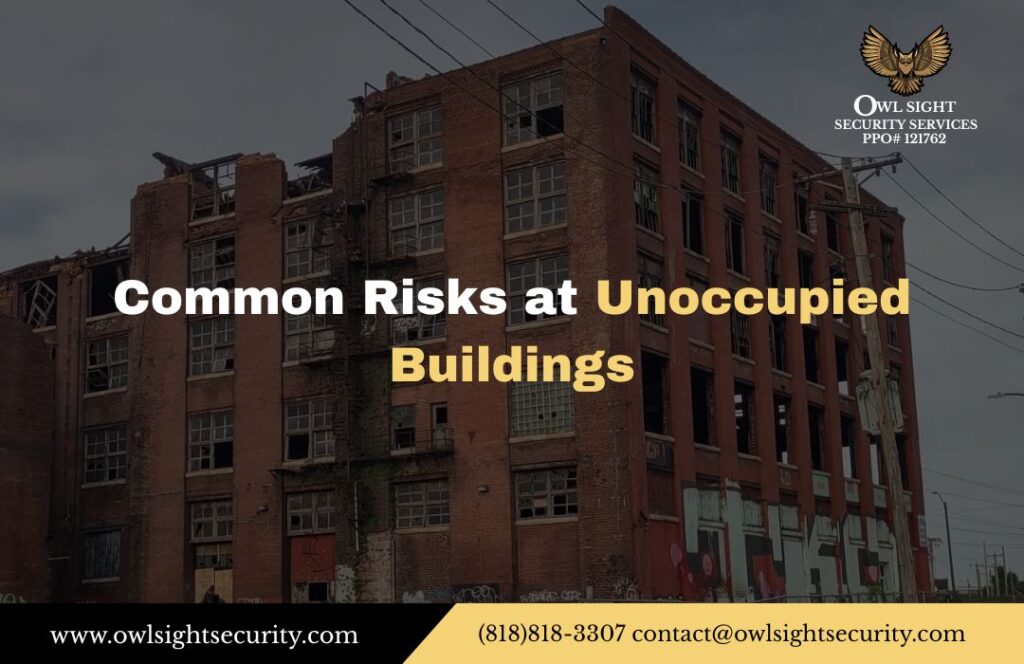
When a building becomes unoccupied, risk does not remain static. Instead, exposure increases as daily activity disappears and oversight becomes inconsistent. This is why property owners often rely on security guards for unoccupied buildings to maintain control, deter unauthorized access, and prevent small issues from escalating into costly incidents.
Understanding common risks at unoccupied buildings starts with recognizing that absence signals opportunity to the wrong people.
Why Unoccupied Buildings Attract Unwanted Attention
Unoccupied buildings quickly stand out due to dark interiors, lack of foot traffic, and visible inactivity. These conditions communicate that no one is present to challenge entry or monitor behavior.
Over time, nearby individuals notice the pattern, which encourages testing of doors, windows, and perimeter access points. Once a property is perceived as unattended, repeat attempts become more likely.
Visibility without presence creates exposure.
The Most Common Risks at Unoccupied Properties
Unoccupied buildings experience predictable problems when enforcement is absent.
The most common risks include:
- Repeated unauthorized entry attempts
- Theft of fixtures, wiring, or materials
- Vandalism that worsens over time
- Squatting or illegal occupancy
- Fire and safety hazards caused by trespassers
Each risk compounds repair costs and liability exposure.
Why Passive Security Measures Fail Over Time
Signage, fencing, and cameras may deter initial attempts, but they lose effectiveness when no response follows suspicious activity. Intruders learn quickly which properties generate no consequences.
Without active enforcement, these measures become background noise rather than deterrents. This failure reinforces common risks at unoccupied buildings when monitoring is inconsistent.
Deterrence requires response, not just presence.
How Professional Security Interrupts the Risk Cycle
Professional security changes the perception of neglect into one of enforcement. Guards patrol the property, verify access, and intervene when unauthorized activity occurs.
Consistent presence discourages repeat attempts and documents conditions that support accountability. This active approach prevents escalation and protects the property until it is reoccupied, sold, or redeveloped.
Intervention breaks the cycle.
Fire Hazards and Safety Risks
Vacant buildings face an increased risk of fire due to unauthorized access, illegal activity, or neglected maintenance issues. Tampering with electrical systems, use of open flames, or damaged wiring can create dangerous conditions.
Without regular oversight of fire watch guards, small hazards can go unnoticed until they result in serious damage. Fire incidents at vacant properties often spread quickly and may impact neighboring buildings.
Active monitoring and regular patrols help identify hazards early and reduce the likelihood of major incidents.
Liability and Legal Exposure
Property owners remain legally responsible for vacant buildings. Injuries, accidents, or illegal activity occurring on-site can result in lawsuits, fines, or insurance complications.
Slip-and-fall incidents, unsafe structures, or unauthorized occupancy all increase liability exposure. Even when a building is not in use, owners are expected to take reasonable steps to prevent harm.
Maintaining documented security coverage demonstrates due diligence and helps protect owners from unnecessary legal risk.
Why Ongoing Security Is Essential for Unoccupied Buildings
Vacancy does not remove responsibility. Owners remain accountable for safety, compliance, and community impact.
Ongoing security ensures that extended vacancy does not turn into deterioration or liability. Regular patrols maintain control during transition periods and reduce exposure.
Owl Sight Security Services provides trained professionals experienced in long-term vacant property monitoring, access control, and loss prevention. Their structured approach directly addresses common risks at unoccupied buildings through consistent enforcement and reporting.
Ignoring common risks at unoccupied buildings often leads to preventable damage and escalating costs.
Frequently Asked Questions
Why are vacant buildings more vulnerable than occupied ones?
Vacant buildings lack daily activity and oversight, making them easier targets for trespassing, vandalism, and theft.
Is security necessary if a building is only temporarily unoccupied?
Yes, even short periods of vacancy can attract unauthorized activity, especially if the property appears unattended.
Can security guards help with insurance requirements?
Yes, documented security coverage may help meet insurance expectations and demonstrate due diligence.
What types of properties benefit most from vacant property security?
Commercial buildings, residential developments, construction sites, and properties awaiting sale or renovation all benefit from professional security coverage.