

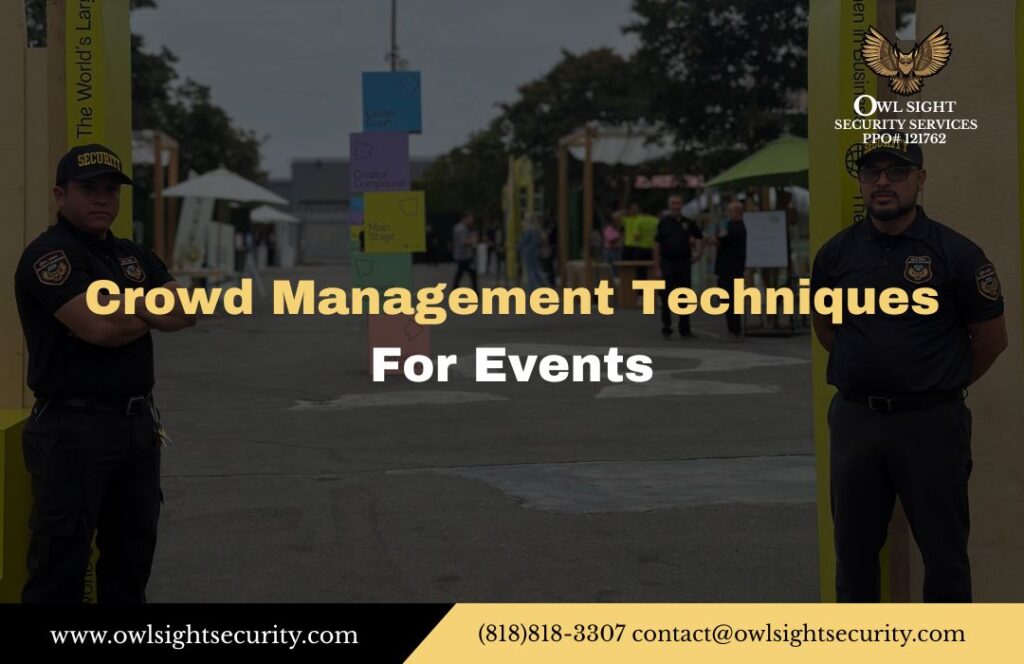
Event organizers must anticipate how crowds will move, gather, and respond under pressure. Without structured oversight, large groups can quickly create bottlenecks, conflicts, or safety hazards. For this reason, many organizers rely on security guards for crowded events to implement structured crowd management techniques that maintain order without disrupting the event experience.
Effective crowd management techniques for events focus on prevention, visibility, and controlled movement rather than reactive enforcement.
Why Crowd Flow Planning Prevents Early Disruptions
Crowd management begins before guests arrive. Organizers must consider entry points, exit routes, vendor placement, and high-traffic areas to prevent congestion.
When planners overlook traffic patterns, guests cluster near entrances, bars, stages, or restrooms. This clustering increases tension and reduces emergency access.
Security personnel help monitor these flow patterns and redirect movement before congestion escalates.
How Controlled Entry Reduces Overcrowding
Entry management plays a critical role in maintaining safe crowd density. When staff allow unchecked entry, venues can exceed safe capacity levels without realizing it.
Security teams monitor headcounts, verify tickets or credentials, and regulate entry pace. These techniques prevent overcrowding and reduce pressure on interior spaces.
Controlled access remains one of the most effective crowd management techniques for events.
Common Crowd Risks at Large Gatherings
Crowded environments create predictable risks when organizers lack structure.
The most common crowd-related risks include:
- Bottlenecks are forming near entrances or exits.
- Physical altercations escalating in tightly packed areas.
- Restricted emergency access due to blocked pathways.
- Panic or confusion during unexpected incidents.
- Individuals pushing through lines or bypassing controls.
Each risk increases when no trained authority monitors crowd behavior.
Why Visible Security Deters Escalation
Crowds respond differently when trained personnel maintain a visible presence. Security guards provide immediate authority, which discourages aggressive behavior and rule violations.
Guards also identify signs of agitation or tension before disputes escalate. By addressing minor issues early, they prevent larger disruptions that could affect the entire event.
Proactive intervention reduces the need for forceful response.
How Communication Supports Safe Crowd Management
Effective crowd management depends on clear communication between security personnel, event staff, and organizers. Guards must relay real-time information about crowd density, entry flow, and emerging concerns.
When teams communicate consistently, they can adjust staffing, open alternative routes, or reposition personnel to reduce congestion. This coordination strengthens overall safety and operational control.
Why Professional Event Security Improves Crowd Control
Managing large gatherings requires training, situational awareness, and coordination. Event staff alone cannot monitor crowd behavior while managing logistics and guest services.
Owl Sight Security Services provides trained professionals who understand crowd psychology, access control, and rapid response procedures. Their structured approach supports effective crowd management techniques for events by maintaining visibility, communication, and consistent enforcement.
Failure to implement structured crowd control often leads to preventable incidents and reputational damage.
Frequently Asked Questions
Why is crowd management important even at private events?
Private events can still experience overcrowding, disputes, and access issues when attendance increases.
Can crowd control prevent physical altercations?
Yes, early intervention and visible authority significantly reduce the likelihood of escalation.
Can security adjust crowd control during the event?
Yes, trained guards adapt positioning and coverage based on crowd movement and conditions.