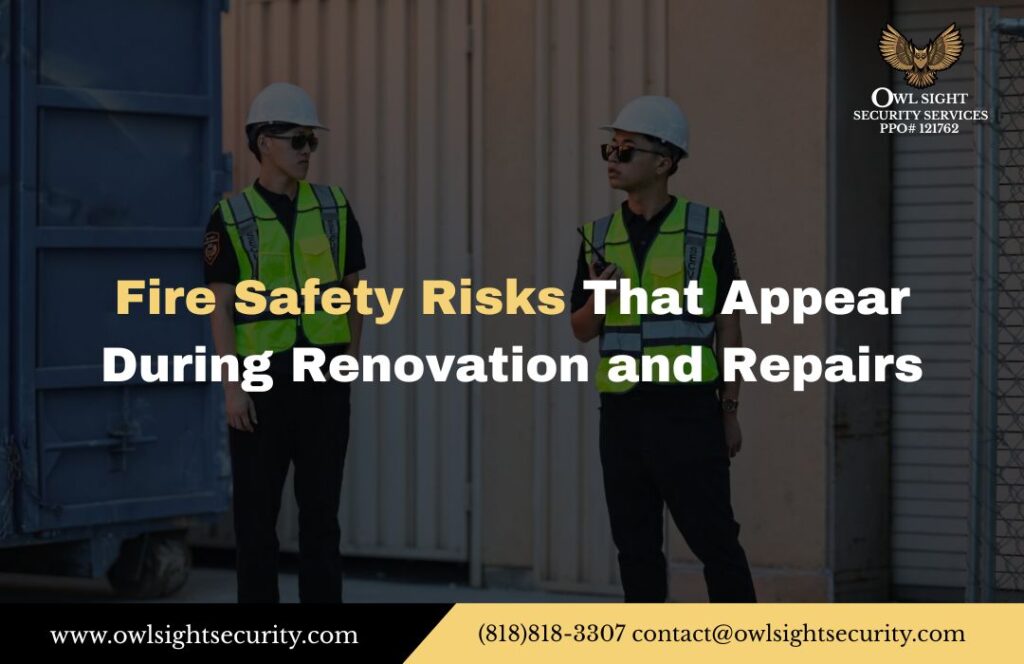
Renovation and repair work introduces temporary conditions that significantly increase fire risk. Fire alarm systems may be disabled, electrical systems may be exposed, and hot work often takes place in occupied or partially occupied buildings. This is why property owners rely on security guards for fire watch to monitor hazards and maintain safety while normal fire protection systems are compromised.
Understanding fire safety risks that appear during renovation and repairs requires recognizing that these risks are created by change, not neglect.
Why Renovation Work Increases Fire Exposure
Renovation projects alter the normal structure and systems of a building. Walls are opened, wiring is accessed, and temporary power sources are installed.
These changes remove layers of protection that buildings rely on every day. When combined with dust, debris, and unfamiliar contractors, the likelihood of fire hazards increases quickly.
Fire risk rises because safeguards are temporarily reduced.
How Disabled Fire Systems Create Immediate Risk
During repairs, fire alarms, sprinklers, or detection systems are often taken offline. Even short outages create serious exposure.
Without automatic detection, small issues such as overheating equipment or sparks can go unnoticed. Response depends entirely on human observation during these periods.
This reality highlights fire safety risks that appear during renovation and repairs when systems are unavailable.
The Most Common Fire Hazards During Renovation
Renovation environments produce predictable fire hazards that require active monitoring.
The most common hazards include:
- Hot work, such as welding or cutting
- Temporary electrical wiring and extension cords
- Accumulated dust and flammable debris
- Blocked exits or altered escape routes
- Disabled alarms or sprinkler systems
Each hazard becomes more dangerous without supervision.
Why Fire Watch Security Guards Reduce Renovation Risk
Fire watch security guards provide continuous monitoring while systems are offline. Their role is to observe conditions, identify hazards, and respond immediately if a risk appears.
Guards patrol affected areas, ensure exits remain accessible, and enforce safety boundaries. Their presence discourages unsafe behavior and prevents small issues from escalating.
Active monitoring addresses fire safety risks that appear during renovation and repairs before they result in damage or injury.
How Fire Watch Supports Compliance and Occupant Safety
Fire departments and inspectors often require fire watch coverage during system outages. Failure to comply can result in fines, shutdowns, or denied occupancy.
Fire watch security supports compliance by maintaining patrol logs and enforcing safety procedures. This oversight allows renovation work to continue without compromising occupant safety.
Compliance protects people and operations.
Why Professional Fire Watch Security Is Essential During Repairs
Fire watch assignments demand focus, training, and awareness of changing conditions. Guards must understand where hazards exist and how to respond quickly.
Owl Sight Security Services provides trained professionals experienced in fire watch coverage during renovations, repairs, and system outages. Their structured approach ensures fire safety risks that appear during renovation and repairs are managed consistently and responsibly.
Ignoring fire safety risks that appear during renovation and repairs often leads to preventable incidents during temporary but critical periods.
Frequently Asked Questions
Why does renovation increase fire risk?
Renovation disables systems and introduces temporary hazards such as hot work and exposed wiring.
When is fire watch security required during repairs?
Fire watch is required whenever fire protection systems are offline or impaired.
Do fire watch guards replace fire alarm systems?
No, they provide temporary human monitoring until systems are restored.