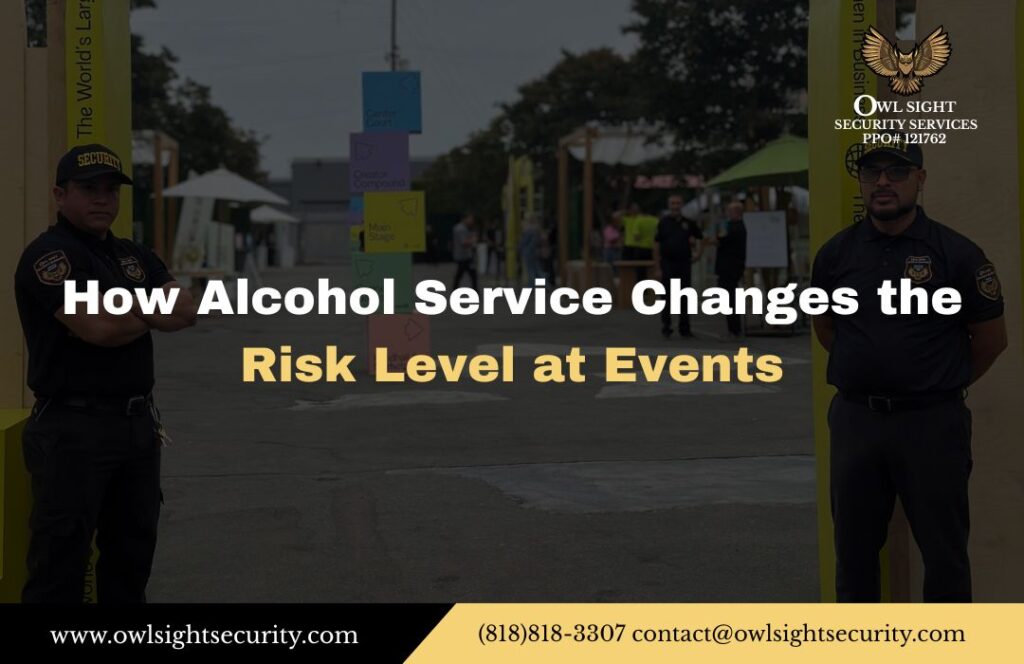
Alcohol service changes the dynamics of any event almost immediately. Judgment declines, emotions intensify, and small disagreements escalate faster than they would in alcohol-free environments. This is why many organizers rely on event security guards to maintain control, manage behavior, and protect guests once alcohol is introduced.
Understanding how alcohol service changes the risk level at events starts with recognizing that alcohol affects decision-making long before visible problems appear.
Why Alcohol Increases Security Risks at Events
Alcohol affects decision-making, impulse control, and perception. As consumption increases, guests may become less aware of boundaries, rules, or personal safety considerations. What begins as a calm, organized event can quickly shift if alcohol-related behavior is not monitored.
Security risks increase not only because of intoxication, but also because alcohol changes how guests interact with one another. Arguments escalate faster, misunderstandings occur more easily, and compliance with event rules decreases. Without visible enforcement, these situations can spiral before staff have time to react.
Events serving alcohol require proactive security rather than reactive response.
The Types of Incidents Most Commonly Linked to Alcohol
Alcohol-related incidents are not limited to physical altercations. Many issues develop gradually and go unnoticed until they disrupt the event.
Common alcohol-related security concerns include:
- Verbal disputes that escalate into physical confrontations
- Disorderly conduct or refusal to follow event rules
- Guests entering restricted or staff-only areas
- Harassment or inappropriate behavior toward other attendees
- Impaired driving risks in parking or pickup areas
Recognizing these patterns allows security teams to intervene early and maintain control without drawing unnecessary attention.
Why Events With Alcohol Need Specialized Security Planning
Security coverage for events serving alcohol cannot rely on standard crowd monitoring alone. Entry points, bar areas, and high-traffic zones require focused attention. Guards must understand how alcohol changes behavior and be prepared to intervene calmly and professionally.
Trained security personnel monitor consumption patterns, identify signs of escalating behavior, and coordinate with event staff when service limits need to be enforced. This coordination is critical, especially when guests challenge bartenders or event staff.
Professional security planning also includes managing exits and transportation areas to reduce post-event risks.
High-End Events Require a Higher Level of Control
Upscale events, particularly those held in exclusive locations, face additional expectations. Guests expect smooth operations, discreet security, and minimal disruption. However, these events are not immune to alcohol-related incidents.
At private parties, galas, and corporate functions, security must maintain a professional presence without appearing intrusive. This balance is especially important at events where visibility, discretion, and professionalism are essential.
Security at these events focuses on prevention, subtle intervention, and maintaining the event’s atmosphere while ensuring control.
How Professional Event Security Guards Manage Alcohol-Related Risk
Professional event security guards are trained to recognize behavioral changes before situations escalate. Their role is not to police guests, but to maintain order and enforce event policies consistently.
Guards monitor crowd dynamics, support bartenders and staff, and step in when guests become disruptive or non-compliant. They also manage access to restricted areas and assist with guest removal if necessary, following established protocols.
Their presence alone acts as a deterrent, reminding guests that expectations are enforced throughout the event.
Why Professional Event Security Is Critical for Alcohol-Served Events
Alcohol-served events require planning beyond guest lists and bar service. Risk management must remain active throughout the event.
Professional security ensures incidents are addressed quickly and responsibly. Guards document issues, coordinate responses, and maintain order without confrontation.
Owl Sight Security Services provides trained professionals experienced in alcohol-served events, crowd monitoring, and incident prevention. Their structured approach reinforces how alcohol service changes the risk level at events through visibility, control, and accountability.
Ignoring how alcohol service changes the risk level at events often leads to preventable incidents that impact guests and hosts alike.
Frequently Asked Questions
Does serving alcohol automatically require security guards?
While not always legally required, professional security is strongly recommended when alcohol is served due to increased risk of incidents.
Can bartenders handle alcohol-related issues on their own?
Bartenders focus on service, not enforcement. Security guards support staff by handling confrontations and enforcing event rules.
How do security guards handle intoxicated guests?
Trained guards use de-escalation techniques, enforce policies calmly, and remove guests if necessary following event procedures.
Does security affect the guest experience?
When done properly, security enhances the experience by maintaining order and preventing disruptions without being intrusive.