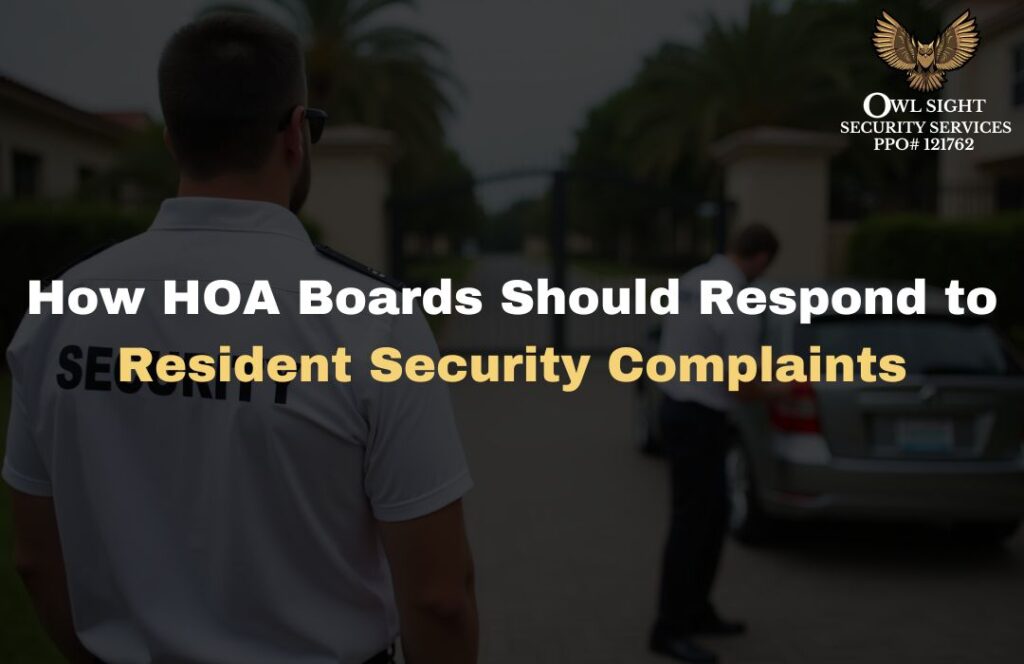
When residents raise security concerns, they are rarely reacting to a single isolated issue. Most complaints reflect repeated observations, shared experiences, or a growing sense that rules are not consistently enforced. This is why many associations work with a security guard service for HOAs to ensure complaints are addressed with visibility, structure, and documented follow-through rather than informal reassurances.
Understanding how HOA boards should respond to resident security complaints requires a measured approach that balances resident trust, operational reality, and consistent enforcement.
Why Resident Security Complaints Signal Larger Issues
Security complaints usually surface after residents notice patterns such as recurring tailgating, unfamiliar individuals in common areas, or slow responses to prior incidents. These observations often accumulate over time, especially when residents feel earlier concerns were acknowledged but not resolved.
When boards delay action or respond inconsistently, residents may interpret that silence as inaction. Over time, confidence in leadership erodes, and minor security issues gain disproportionate attention because residents no longer trust that problems will be addressed early.
Prompt, structured attention prevents frustration from turning into conflict.
How HOA Boards Should Evaluate Complaints Fairly
Boards should begin by separating emotion from information. A calm review process allows boards to understand whether a complaint reflects a one-time event or an ongoing vulnerability.
Evaluating recent incident reports, access logs, and prior complaints helps identify trends rather than assumptions. Boards should also confirm whether current policies address the issue and whether enforcement has been consistent across residents and visitors.
This approach supports how HOA boards should respond to resident security complaints without overreacting to isolated incidents or dismissing legitimate concerns.
Practical Steps Boards Should Take After Receiving a Complaint
Once a concern is validated, boards should respond with clarity rather than silence. Residents want to know their concern was heard and that steps are being taken.
Effective response actions include:
- Acknowledging the complaint in writing within a reasonable timeframe
- Reviewing security logs, patrol reports, or access activity
- Communicating findings and next steps without unnecessary delay
- Adjusting enforcement procedures where gaps are identified
- Documenting actions taken for accountability and future reference
Clear action reduces speculation and demonstrates responsible governance.
How Security Guards Strengthen Board Decision-Making
Security guards provide an objective layer of oversight that boards cannot replicate through meetings or resident feedback alone. Their daily presence allows them to observe patterns, verify access behavior, and document incidents as they occur.
These reports give boards factual insight into whether complaints align with on-site conditions. Guards also reduce tension by serving as a neutral point of enforcement, which prevents residents from confronting one another directly.
This operational clarity plays a central role in how HOA boards should respond to resident security complaints, because decisions are based on evidence rather than perception.
Why Clear Communication Prevents Escalation
Even when complaints cannot be resolved immediately, communication matters. Residents are far less likely to escalate concerns when they understand what steps are underway and what outcomes to expect.
Boards should communicate actions taken, policy clarifications, or enforcement changes in a consistent and professional tone. This transparency discourages rumors and reinforces that safety concerns are handled through process rather than favoritism.
Predictable communication builds trust and reduces repeat complaints.
When Policy Adjustments Become Necessary
Some complaints expose policy gaps rather than enforcement failures. Visitor access rules, parking procedures, or after-hours protocols may no longer align with how the community is being used.
Boards should treat these moments as opportunities to refine policies, communicate updates clearly, and apply changes evenly. Well-defined rules reduce ambiguity and support consistent enforcement moving forward.
How Professional Security Supports HOA Stability
Professional security helps boards move from reactive responses to structured prevention. Guards provide continuity even as board members change, ensuring enforcement remains stable and predictable.
Owl Sight Security Services supports HOA communities with trained professionals who understand access control, resident interaction, and board coordination. Their structured approach allows boards to address concerns confidently while preserving community harmony.
Failing to address how HOA boards should respond to resident security complaints often leads to repeated issues, resident dissatisfaction, and unnecessary liability.
Frequently Asked Questions
What types of security complaints do HOA boards receive most often?
HOA boards most often receive complaints related to unauthorized access, tailgating, parking enforcement issues, and delayed response to incidents.
How quickly should an HOA board acknowledge a security complaint?
Boards should acknowledge complaints promptly to confirm the issue is under review and to prevent resident frustration from escalating.
Should HOA boards share outcomes of security investigations with residents?
Boards should share appropriate findings and actions taken while protecting sensitive or private information.