
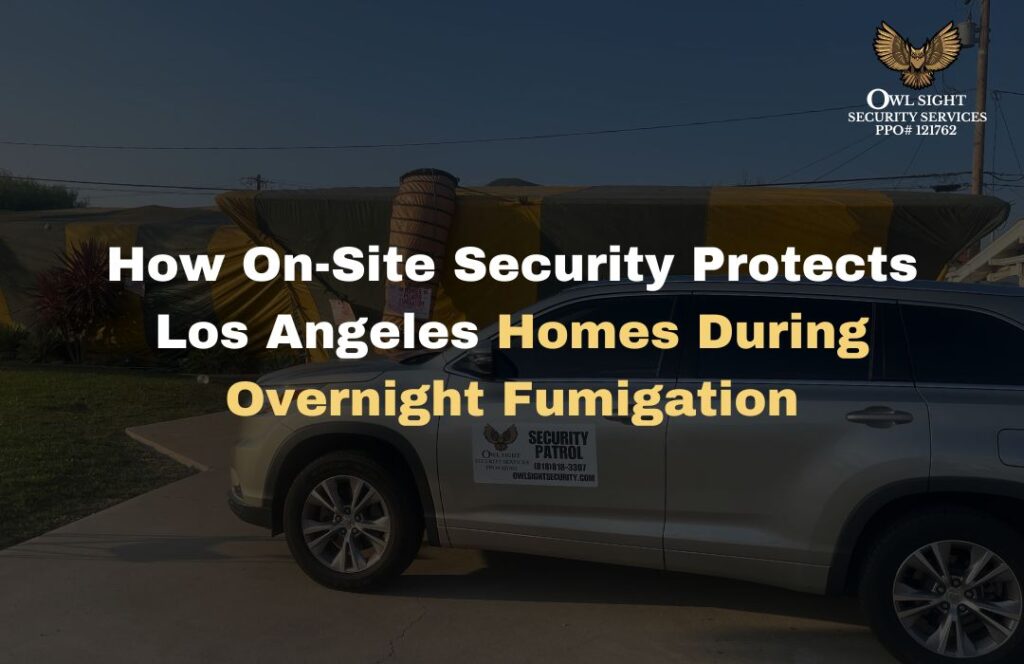
Overnight fumigation leaves homes visibly vacant, unattended, and highly exposed. Tents, warning signs, and sealed entry points make it clear that no one is inside, especially after dark when activity in the area slows. This is why many property owners rely on security guards for fumigations to maintain constant oversight, prevent unauthorized access, and protect the home throughout the night.
Understanding how on-site security protects homes during overnight fumigation requires recognizing that risk increases significantly once daylight ends and monitoring decreases.
Why Overnight Fumigation Increases Security Risk
Fumigation already signals vacancy, but overnight hours amplify that signal. Darkness reduces visibility, neighbors are asleep, and normal street activity declines, making it easier for intruders to approach without being noticed.
Intruders may be drawn by curiosity, opportunity, or the assumption that alarms and surveillance systems are disabled during fumigation. Even brief access attempts can lead to property damage, broken seals, or safety hazards.
The combination of visibility and silence makes overnight fumigation the highest-risk period of the process.
How Unauthorized Access Happens After Hours
Most intrusions during fumigation do not involve forced entry. Individuals may lift tent edges, tamper with warning signage, or test secondary access points such as side gates or garages.
After-hours conditions allow these actions to go unnoticed unless someone is actively monitoring the property. Once a breach occurs, it often invites additional attempts, especially if there is no immediate response.
This pattern explains how on-site security protects homes during overnight fumigation by interrupting access attempts before they escalate.
Critical Protection Measures During Overnight Fumigation
Effective protection requires more than preparation before tenting. Oversight must continue throughout the night.
Essential overnight protection measures include:
- Continuous perimeter monitoring after dark
- Preventing tampering with tents, seals, and signage
- Challenging unauthorized individuals immediately
- Documenting activity and site conditions
- Coordinating response if suspicious behavior occurs
These measures ensure the home remains secure until fumigation is complete.
Why On-Site Security Is More Effective Than Remote Monitoring
Cameras and alarms may record activity, but they do not intervene. During overnight fumigation, response delays increase risk and liability.
On-site security provides immediate presence. Guards deter intruders simply by being visible and respond in real time when someone approaches the property. Their presence removes the uncertainty intruders rely on when testing access.
This active deterrence is central to how on-site security protects homes during overnight fumigation, especially during late-night hours when properties are most vulnerable.
How Security Guards Maintain Safety and Compliance
Security guards protect more than the structure itself. They also safeguard the fumigation process by ensuring no one enters the property during treatment.
Unauthorized entry can compromise safety, invalidate fumigation procedures, and create serious liability. Guards prevent these risks by enforcing perimeter boundaries and monitoring conditions throughout the night.
Their documentation provides proof that the property remained secured during treatment.
Preventing Escalation Through Continuous Overnight Coverage
Most serious incidents begin with small breaches that go unnoticed. A lifted tent edge or displaced sign can signal vulnerability to others nearby.
Continuous overnight coverage ensures minor issues are corrected immediately rather than discovered hours later. It also reassures neighbors and fumigation crews that the site is under control.
Consistency prevents escalation and protects the property until clearance is confirmed.
Coordinating Security With Fumigation Timelines
Fumigation schedules often extend longer than expected due to inspections or weather. Overnight coverage must remain flexible and uninterrupted.
Security guards coordinate with fumigation companies and homeowners to maintain coverage until the property is officially cleared. This coordination prevents dangerous gaps when homes remain tented longer than planned.
Clear communication keeps protection intact from start to finish.
Why Professional Fumigation Security Is Essential Overnight
Overnight fumigation presents risks that standard residential security does not address. Professional fumigation security focuses on visibility, perimeter control, and immediate response during the most vulnerable hours.
Owl Sight Security Services provides trained professionals experienced in overnight fumigation monitoring, access enforcement, and property protection. Their structured approach helps homeowners avoid theft, damage, and liability while properties remain unoccupied.
Ignoring how on-site security protects homes during overnight fumigation often leads to preventable incidents during the most critical hours of treatment.
Frequently Asked Questions
Why is overnight fumigation more risky than daytime fumigation?
Overnight fumigation increases risk because darkness and reduced activity make intrusion easier to conceal.
How long should overnight security remain in place?
Security should remain in place until the fumigation company confirms clearance and safe re-entry.
Are cameras enough to protect a fumigated home overnight?
Cameras alone are not enough because they do not prevent or respond to access attempts in real time.