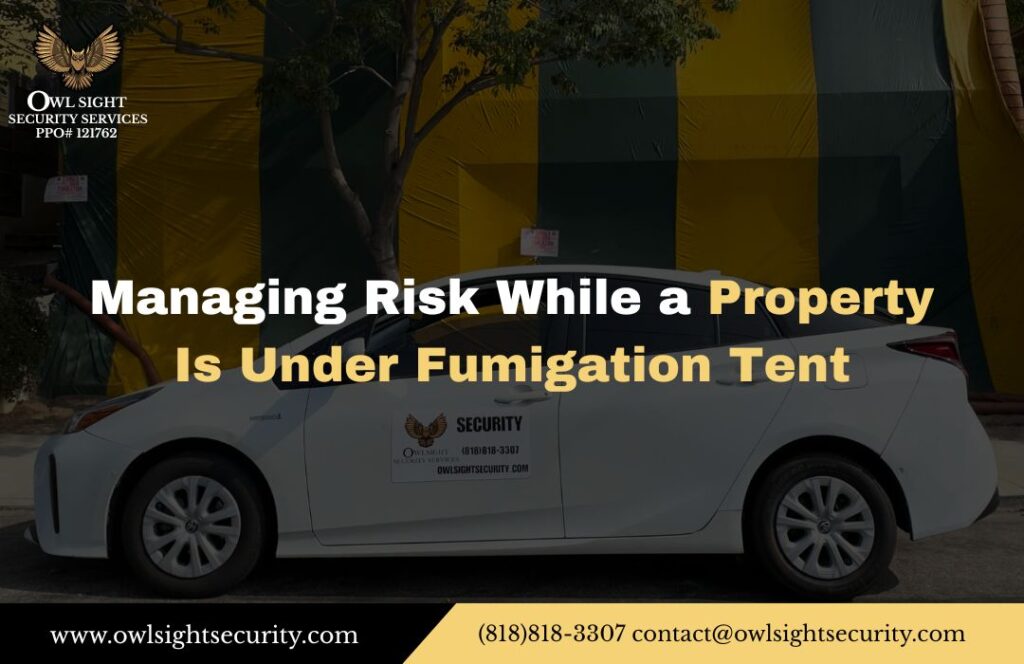
When a property is placed under a fumigation tent, normal safeguards are temporarily removed. Alarms may be disabled, residents vacate the premises, and visible tenting signals vulnerability to the public. For this reason, many owners rely on fumigation security guards to maintain control, prevent unauthorized access, and reduce liability during this high-risk period.
Understanding and managing risk while a property is under fumigation tent requires planning for security gaps that exist only during this short but critical window.
Why Fumigation Tents Increase Exposure Immediately
Fumigation tents clearly indicate that a property is unoccupied and inaccessible to its owner. This visibility attracts attention from individuals who assume no monitoring is in place.
During fumigation, doors, windows, and garages are sealed rather than secured for normal use. Without oversight, these conditions invite tampering, trespassing, and theft.
Risk increases because opportunity becomes obvious.
How Unauthorized Access Creates Safety and Liability Issues
Unauthorized access during fumigation creates more than property loss concerns. Individuals who enter a tented structure face serious health risks due to hazardous chemicals.
If someone enters and becomes injured, the property owner may face liability despite restricted access signage. This exposure grows when no one is present to challenge or stop entry attempts.
This reality explains why managing risk while a property is under fumigation tent must include active monitoring rather than passive warnings.
The Most Common Risks During the Fumigation Period
Fumigation introduces predictable risks that escalate quickly without enforcement.
The most common risks include:
- Tent tampering or partial removal
- Unauthorized entry through garages or side access points
- Theft of valuables while alarms are inactive
- Public exposure to hazardous fumigation chemicals
- Liability for injuries or safety violations
Each risk carries financial and legal consequences.
Why On-Site Security Guards Reduce Risk Effectively
On-site security guards provide immediate deterrence during fumigation. Their visible presence discourages access attempts and stops tampering before it escalates.
Guards monitor all sides of the structure, enforce restricted zones, and respond instantly to suspicious activity. This real-time enforcement closes the gap that signage and fencing cannot address.
Active coverage is central to managing risk while a property is under fumigation tent.
How Security Coverage Protects Property Owners
Security guards protect property owners by preventing incidents rather than documenting losses after the fact. Continuous oversight reduces theft, damage, and liability exposure.
Guards also maintain logs that demonstrate due diligence if questions arise from insurers or regulators. This documentation supports compliance and risk mitigation.
Prevention is always less costly than recovery.
Why Professional Fumigation Security Is Essential
Fumigation security requires focus, consistency, and awareness of safety boundaries. Guards must understand restricted access rules and the importance of uninterrupted coverage.
Owl Sight Security Services provides trained professionals experienced in fumigation monitoring, access enforcement, and liability prevention. Their structured approach ensures managing risk while a property is under fumigation tent remains controlled from start to clearance.
Ignoring managing risk while a property is under fumigation tent often results in preventable incidents during one of the most vulnerable phases of property ownership.
Frequently Asked Questions
Why is fumigation considered a high-risk period for properties?
Because properties are vacant, alarms may be disabled, and tenting signals vulnerability.
Can signage alone prevent people from entering a fumigated property?
No, signage warns but does not stop unauthorized access.
Do security guards monitor the entire tented structure?
Yes, guards patrol and observe all sides continuously.