
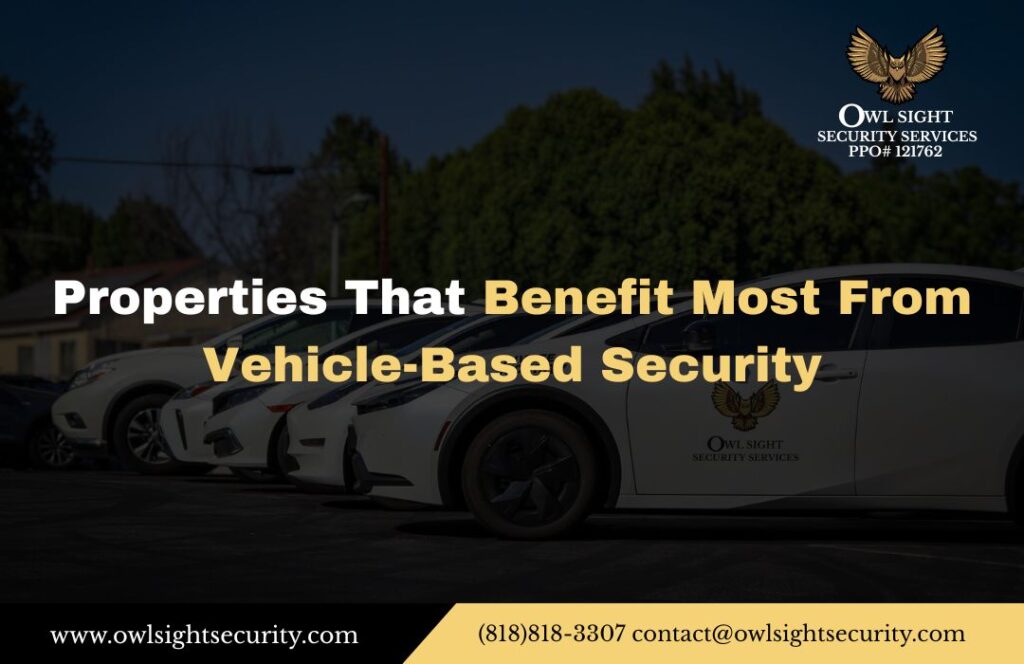
Some properties require more than static guards or camera systems to maintain effective security coverage. Large footprints, multiple access points, and wide perimeters often demand mobile oversight to reduce response times and increase visibility. Many property owners rely on vehicle patrol security in LA to address how properties that benefit from vehicle security require consistent movement and active deterrence.
Vehicle-based security introduces unpredictability that discourages criminal activity. Marked patrols create presence across multiple zones rather than concentrating security in one location. This approach strengthens coverage for properties with complex layouts or extended boundaries.
Large Commercial and Industrial Properties
Warehouses, distribution centers, and industrial facilities often span large areas that static guards cannot efficiently monitor. These properties include loading docks, yards, and multiple entry points that require frequent checks. Vehicle patrols allow guards to move quickly across the site and identify issues early.
Idle zones within industrial properties create blind spots without mobile oversight. Criminals often target these areas when they appear unmonitored. Vehicle patrols reduce these vulnerabilities by maintaining visibility across the entire property.
Construction Sites and Development Projects
Construction sites benefit from vehicle-based security due to their changing layouts and exposed materials. Equipment, materials, and temporary fencing create conditions that require adaptable patrol strategies. Mobile patrols help address how properties that benefit from vehicle security include active and paused job sites.
Vehicle patrols allow guards to monitor perimeters, access points, and storage areas efficiently. This mobility supports faster response when suspicious activity occurs. Construction teams benefit from consistent oversight during both work hours and downtime.
Residential Communities With Wide Perimeters
Gated communities and large residential complexes often include multiple buildings, parking areas, and shared amenities. These environments require security coverage that extends beyond a single entrance or lobby. Vehicle patrols provide broad visibility and reinforce deterrence throughout the community.
Marked vehicles discourage unauthorized activity in parking structures and along internal roadways. This presence improves response times and reduces reliance on residents to report issues. Communities frequently work with an LA security guard company to maintain consistent patrol coverage.
Retail Centers and Mixed-Use Properties
Shopping centers and mixed-use developments experience fluctuating activity throughout the day. High traffic during business hours contrasts sharply with quiet overnight periods. Vehicle patrols help manage these changing conditions.
Mobile patrols monitor parking lots, storefronts, and delivery zones efficiently. Guards can respond quickly to incidents across the property. This adaptability explains why properties that benefit from vehicle security often include retail environments.
Vacant and Transitional Properties
Vacant properties face increased risk due to lack of daily activity and supervision. Vehicle patrols provide intermittent but visible monitoring that prevents properties from appearing abandoned. This approach deters trespassing and vandalism.
Mobile patrols allow security teams to check multiple vacant sites within a defined area. This efficiency supports properties awaiting sale, renovation, or occupancy. Regular patrols reduce escalation during extended vacancies.
Geographic Coverage Across Southern California
Vehicle-based security proves especially effective across diverse regions with varying property types. Areas such as Pasadena and Santa Monica include mixed residential and commercial environments that benefit from mobile oversight. Patrol flexibility supports changing conditions across neighborhoods.
Properties in Ventura County often include larger lots and lower density layouts. Vehicle patrols maintain visibility across these expanded areas. This regional adaptability supports consistent security coverage.
Marked Patrols Strengthen Deterrence
Visibility plays a critical role in crime prevention. Marked patrols in Long Beach or Beverly Hills signal active monitoring and enforcement. Criminals often avoid properties with visible vehicle-based security.
Marked vehicles also reassure tenants, staff, and visitors. Their presence reinforces order and accountability. This deterrence strengthens overall property management efforts.
Professional Oversight Enhances Security Outcomes
Vehicle-based security requires coordination, training, and situational awareness. Guards must understand patrol routes, risk prioritization, and response procedures. Professional execution ensures patrols remain effective rather than routine.
Owl Sight Security Services provides trained personnel with expertise in mobile patrol operations. Their approach emphasizes visibility, documentation, and response. This expertise ensures property security across Los Angeles and the surrounding areas.
Conclusion
Properties with large footprints, multiple access points, or variable activity levels benefit most from vehicle-based security. Mobile patrols increase visibility, reduce response times, and deter criminal behavior across wide areas. Understanding which properties that benefit from vehicle security allows owners to choose coverage that matches their operational needs.
Professional vehicle patrols support consistent oversight without excessive staffing. Property owners seeking adaptable and visible security coverage can request a quote to evaluate mobile patrol solutions tailored to their property.