

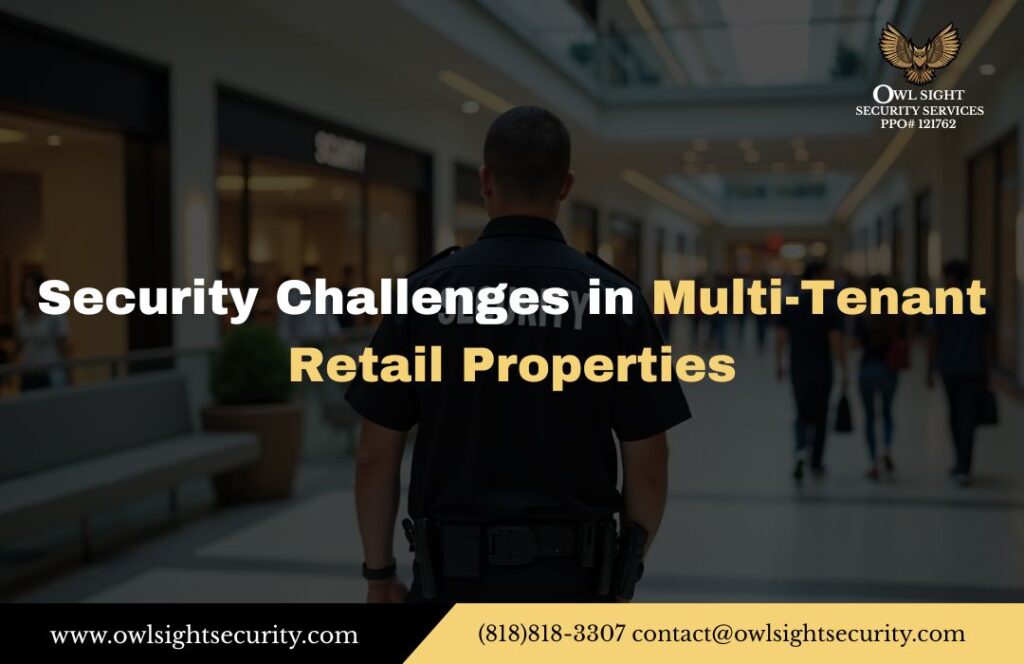
Multi-tenant retail properties operate as shared environments where multiple businesses, customers, and service providers move through the same spaces every day, creating security challenges that are far more complex than those in single-tenant locations. Because responsibility is divided across tenants while risk remains shared, many property owners rely on security guards for shopping centers to maintain consistent oversight, enforce rules uniformly, and protect common areas that no single tenant controls.
Understanding security challenges in multi-tenant retail properties requires looking beyond individual storefronts and focusing on how shared spaces create gaps in accountability.
Why Shared Spaces Increase Security Exposure
Retail centers rely heavily on common areas such as walkways, restrooms, parking lots, and loading zones, all of which experience constant traffic from customers who may not be tied to any single tenant. When no one actively monitors these areas, minor issues can persist long enough to escalate into larger security concerns.
Because tenants focus primarily on their own storefronts, shared spaces often receive less attention, which allows loitering, theft, and disorderly behavior to develop without immediate correction. Over time, these gaps become predictable, making the property more vulnerable.
How Different Store Hours Complicate Security Coverage
One of the defining characteristics of multi-tenant retail properties is that businesses operate on different schedules, which creates uneven activity across the property throughout the day and night. While some stores close early, others remain open later, leaving certain sections partially vacant during predictable periods.
These fluctuations create opportunities for unauthorized activity, especially when reduced foot traffic makes suspicious behavior harder to notice. This imbalance is a key reason security challenges in multi-tenant retail properties tend to increase during evening hours and transitional periods.
Common Security Issues in Multi-Tenant Retail Environments
When enforcement is inconsistent, the same types of problems appear repeatedly across retail centers.
The most common issues include:
- Shoplifting that moves between multiple stores
- Unauthorized access through service corridors or rear entrances
- Loitering in shared seating or entry areas
- Vehicle break-ins and theft in parking lots
- Customer disputes that spill into common spaces
Each of these issues affects more than one tenant, which makes resolution more complicated when security is not centralized.
Why Centralized Security Improves Control and Coordination
Centralized security provides a consistent point of authority across the entire property, rather than forcing individual tenants to handle incidents independently. When security guards oversee shared spaces, rules are enforced evenly and responses remain professional, regardless of which tenant is involved.
This structure reduces confusion, prevents conflicts between tenants, and ensures that issues are addressed before they disrupt multiple businesses. Centralized enforcement directly reduces security challenges in multi-tenant retail properties by restoring accountability.
How Security Guards Protect Tenant Operations and Customer Confidence
Customers judge a retail center as a whole, not individual stores, which means a single incident can damage the reputation of the entire property. When guests feel unsafe in common areas, they are less likely to stay, return, or recommend the location.
Security guards help preserve a safe and welcoming environment by addressing issues quickly and professionally, allowing tenants to focus on operations rather than conflict management. Visible enforcement reassures customers while protecting tenant revenue.
Why Professional Retail Security Makes a Measurable Difference
Retail security requires more than presence; it requires coordination, documentation, and adaptability to changing activity levels. Professional security teams adjust patrols based on traffic patterns, store hours, and recurring concerns.
Owl Sight Security Services provides trained professionals experienced in shopping center environments, shared-space enforcement, and tenant coordination. Their structured approach directly reduces security challenges in multi-tenant retail properties through consistent oversight, clear reporting, and visible deterrence.
Ignoring security challenges in multi-tenant retail properties often results in repeat incidents that affect every business on the site.
Frequently Asked Questions
Why are multi-tenant retail properties harder to secure than single-tenant locations?
Because shared spaces create divided responsibility while exposing all tenants to the same risks.
Do security guards work directly with store managers?
Yes, guards coordinate with tenants while enforcing property-wide security policies.
Are parking lots included in retail security coverage?
Yes, parking areas are one of the most common sources of theft and disturbances.