

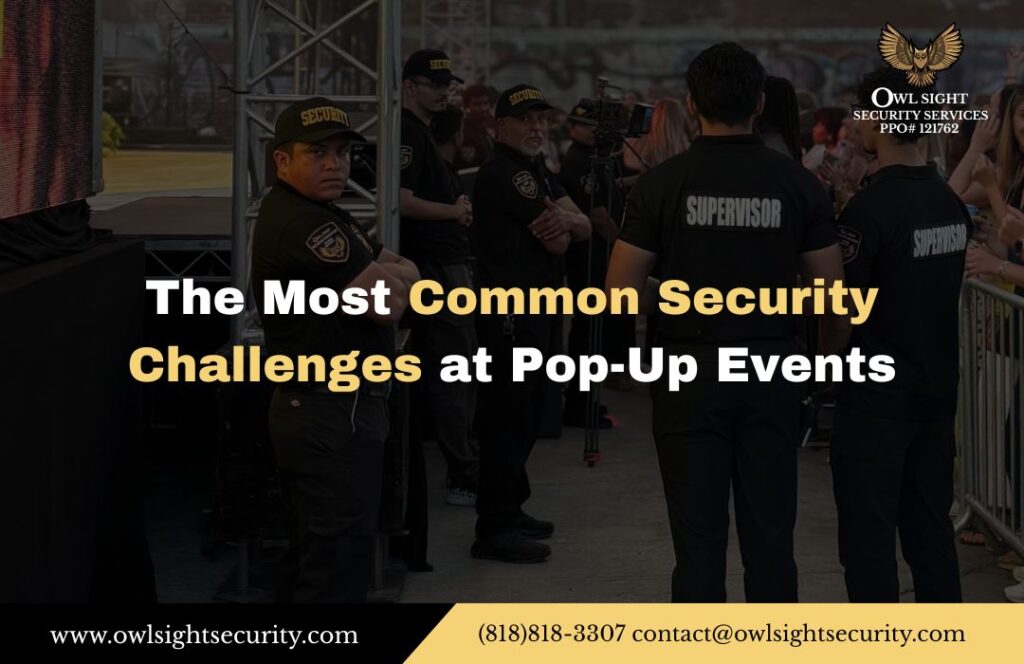
Pop-up events are built for speed and flexibility, but those same traits often create security gaps. Temporary venues, unfamiliar layouts, and short setup windows leave little room for error. This is why many organizers rely on security guards for pop-up events to manage access, deter theft, and maintain control from setup through breakdown.
Understanding the most common security challenges at pop-up events begins with recognizing how temporary environments change enforcement expectations.
Why Temporary Venues Create Unique Security Issues
Pop-up events frequently operate in spaces not designed for crowds or controlled access. Warehouses, storefronts, parking lots, and open venues lack built-in security infrastructure.
Entrances may shift throughout the day, lighting can be inconsistent, and staff often multitask. These conditions make it difficult to identify unauthorized individuals quickly.
Temporary setups demand active oversight to stay secure.
How Limited Planning Time Increases Risk
Pop-up events often move from concept to execution quickly. Short timelines leave little opportunity to test access procedures or identify weak points.
Without rehearsal, staff rely on assumptions rather than clear protocols. Once crowds arrive, correcting mistakes becomes disruptive.
This reality explains the most common security challenges at pop-up events occur during peak activity rather than opening moments.
The Most Common Security Challenges Organizers Face
Security challenges at pop-up events follow predictable patterns when enforcement is limited.
The most common challenges include:
- Uncontrolled entry during peak arrival periods
- Unauthorized access to staff-only or restricted areas
- Theft of merchandise, equipment, or cash
- Crowd congestion near entrances or displays
- Security gaps during setup and breakdown
Each issue escalates quickly without intervention.
Why On-Site Security Guards Reduce Event Disruptions
On-site security guards provide authority and structure that volunteers and staff cannot maintain while managing operations.
Guards verify access, monitor behavior, and intervene early when boundaries are tested. Their presence discourages misconduct while allowing event staff to focus on execution.
This active enforcement addresses the most common security challenges at pop-up events before they impact guest experience.
How Security Supports Smooth Event Flow
Professional security improves flow rather than interrupting it. Guards guide guests, manage lines, and prevent bottlenecks.
When security adapts to crowd patterns, events feel organized rather than restricted. Clear enforcement keeps activity moving safely and efficiently.
Security becomes a support function, not a disruption.
Why Professional Security Protects Pop-Up Event Success
Pop-up events rely on reputation and momentum. A single incident can overshadow the entire activation.
Professional security demonstrates preparation and control. Incident documentation and visible enforcement reduce liability and protect organizers.
Owl Sight Security Services provides trained professionals experienced in pop-up environments, access enforcement, and crowd coordination. Their structured approach helps organizers overcome the most common security challenges at pop-up events while preserving energy and engagement.
Ignoring the most common security challenges at pop-up events often leads to preventable disruptions in fast-moving environments.
Frequently Asked Questions
Why are pop-up events more vulnerable to security issues?
Temporary layouts and limited planning time create access and enforcement gaps.
When do security issues most often occur at pop-ups?
During peak arrivals, high traffic periods, and event breakdown.
Will security guards affect the pop-up atmosphere?
Professional guards maintain order discreetly without disrupting the experience.