

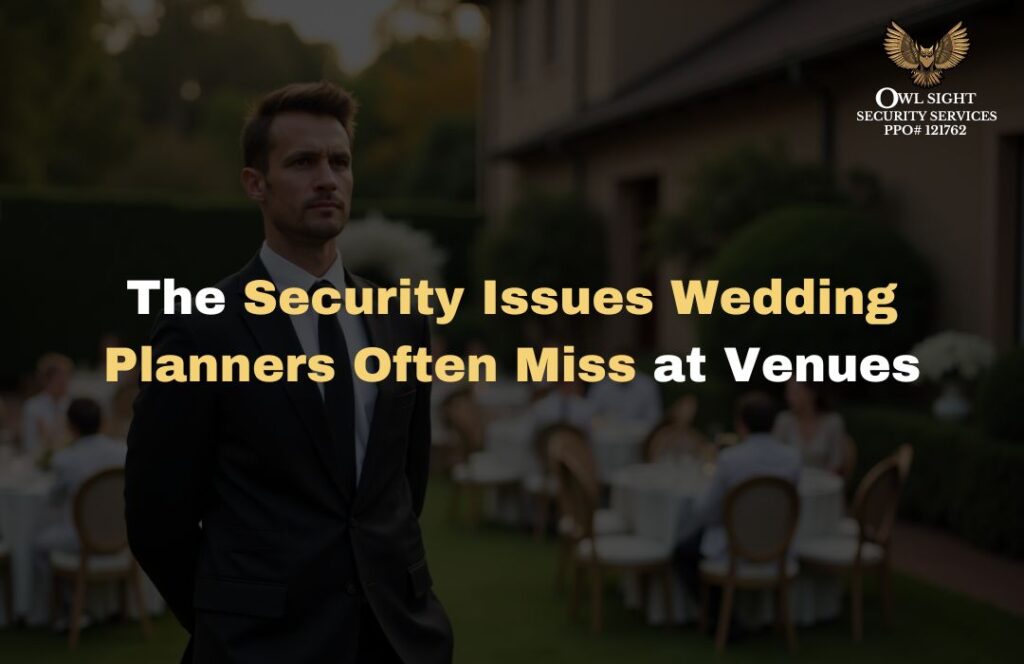
Weddings are designed to feel seamless, emotional, and celebratory, but the behind-the-scenes environment is often complex and fast-moving. Vendors arrive at different times, guests move freely between spaces, alcohol service increases, and attention focuses on the ceremony rather than safety. This is why many planners rely on wedding security guards to quietly manage access, monitor activity, and prevent disruptions without affecting the atmosphere.
Understanding the security issues wedding planners often miss at venues starts with recognizing that weddings operate more like live events than private gatherings, even when hosted in elegant or familiar locations.
Why Wedding Venues Create Hidden Security Gaps
Wedding venues often appear controlled because they are booked spaces, but control is rarely absolute. Venues may host multiple events in the same day, share parking areas, or allow public access to surrounding grounds.
Guests frequently assume they can move anywhere on-site, which blurs boundaries between private and restricted areas. Vendors, photographers, and catering staff also move in and out throughout the day, creating constant access changes.
These conditions create gaps that planners may not notice because attention remains on timelines and guest experience.
Entry and Guest Management Challenges
Guest management is one of the most overlooked aspects of wedding security. Invitation lists exist, but enforcement rarely does.
Uninvited guests, plus-ones, or curious individuals can enter unnoticed, especially during peak arrival periods. Alcohol service further complicates behavior management as inhibitions drop and disputes become more likely.
This lack of structured oversight is a core part of the security issues wedding planners often miss at venues, particularly when venues rely solely on staff not trained for enforcement.
Overlooked Areas That Increase Risk
Wedding planners often focus on ceremony and reception spaces while overlooking secondary areas that create risk.
Commonly overlooked risk areas include:
- Parking lots and valet zones
- Gift tables and card boxes
- Vendor-only access points
- Back hallways and storage rooms
- Outdoor or transitional spaces between venues
These locations attract theft, unauthorized access, and loitering when they are not actively monitored.
How Professional Security Prevents Disruptions
Professional event security operates discreetly but decisively. Guards monitor access points, observe guest behavior, and step in early when issues begin to form.
Security personnel can manage intoxicated guests, resolve disputes quietly, and protect valuables such as gifts and personal property. Their presence discourages rule-breaking without drawing attention away from the celebration.
This proactive approach directly addresses the security issues wedding planners often miss at venues by preventing small problems from escalating into visible disruptions.
Coordinating Security With Wedding Timelines
Weddings follow precise timelines, and security must align with them. Coverage needs shift from setup, to guest arrival, to ceremony, to reception, and finally to teardown.
Security guards coordinate with planners and venue staff to understand schedule changes, vendor arrivals, and key moments. This coordination ensures protection remains consistent during transitions when risk is highest.
When security integrates into the timeline, planners can focus on execution instead of crisis management.
Why Weddings Require a Different Security Approach
Wedding security is not about force or visibility. It is about awareness, discretion, and timing.
Guards must blend into the environment while maintaining authority. They need to understand etiquette, guest expectations, and how to resolve issues without creating scenes.
This balance makes wedding security a specialized service rather than a generic assignment.
Supporting the Wedding Team Without Interference
Planners, coordinators, and venue staff juggle multiple responsibilities on the wedding day. Security acts as a support layer rather than an obstacle.
Guards handle enforcement, guest redirection, and monitoring so the wedding team can focus on flow, presentation, and experience. This division of responsibility keeps the event running smoothly.
Owl Sight Security Services provides trained event security professionals experienced in weddings, private venues, and high-profile gatherings. Their approach emphasizes discretion, access control, and early intervention that protects the event without disrupting it.
Failing to plan for the security issues wedding planners often miss at venues often leads to stress, liability, and avoidable interruptions on a day meant to feel effortless.
Frequently Asked Questions
Why do weddings need professional security at private venues?
Weddings need professional security because guest volume, alcohol service, and multiple access points increase risk even at private venues.
What security issues are most commonly overlooked at weddings?
Commonly overlooked issues include gift table theft, unauthorized guest access, and unmonitored parking areas.
Can security guards handle intoxicated guests discreetly?
Trained security guards handle intoxicated guests calmly and discreetly to avoid scenes or disruption.