

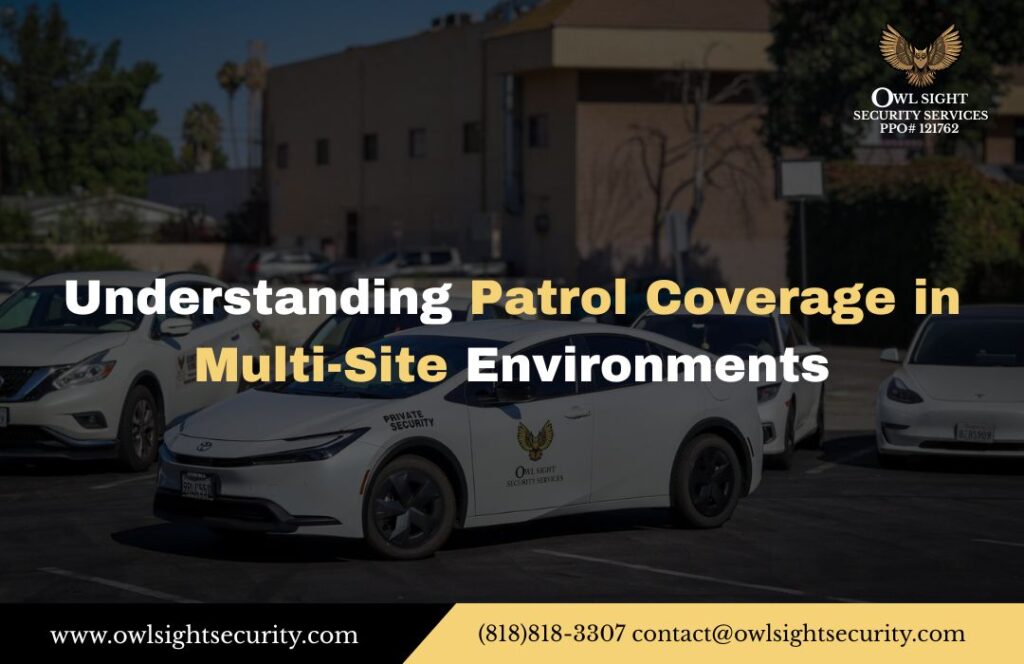
Properties that span multiple buildings, lots, or locations face security challenges that single-site properties do not. Gaps between locations, inconsistent visibility, and delayed response create opportunities for theft and unauthorized access. This is why many organizations rely on marked security vehicle patrols to maintain a presence, consistency, and control across multiple sites.
Understanding understanding patrol coverage in multi-site environments begins with recognizing how complexity increases risk when locations are spread out.
Why Multi-Site Properties Are Harder to Secure
Multi-site environments often include separate entrances, parking areas, and access routes that operate independently. Each location may have different activity levels throughout the day and night.
Without coordinated patrol coverage, some areas receive more attention than others. These uneven patterns quickly become predictable, which increases vulnerability.
Effective security requires balanced coverage rather than isolated monitoring.
How Gaps Form Between Locations Without Patrol Oversight
When security relies on static measures, response times increase across spread-out properties. Cameras may capture incidents, but they do not prevent them in real time.
Without patrols moving between sites, unauthorized individuals learn which locations receive less attention. These gaps grow when schedules remain fixed or poorly coordinated.
This pattern explains that understanding patrol coverage in multi-site environments requires mobility and visibility rather than static solutions.
Key Challenges Patrol Coverage Must Address
Multi-site patrol coverage must manage both movement and consistency to remain effective.
The most common challenges include:
- Uneven monitoring across locations
- Predictable patrol patterns
- Delayed response between sites
- Limited visibility during off-hours
- Difficulty enforcing access consistently
Addressing these challenges requires active coordination.
Why Marked Patrol Vehicles Improve Coverage Consistency
Marked patrol vehicles create immediate visibility across all locations. Their movement signals enforcement rather than observation.
Patrol routes can adjust based on risk, time of day, and recent activity. This flexibility keeps coverage balanced and reduces blind spots.
Visible mobility reinforces understanding patrol coverage in multi-site environments by introducing uncertainty for would-be offenders.
How Coordinated Patrols Reduce Repeat Incidents
Criminal activity often shifts from one location to another when enforcement feels uneven. Coordinated patrols prevent this migration by maintaining consistent presence across all sites.
Guards identify patterns, adjust routes, and document activity across properties. This intelligence prevents repeat incidents and supports long-term risk reduction.
Consistency across locations strengthens overall control.
Why Professional Patrol Planning Matters
Multi-site environments require more than random drive-throughs. Effective patrols depend on planning, documentation, and adaptability.
Professional patrol services align coverage with property layouts, risk profiles, and operational needs. This structure reduces liability and improves response efficiency.
Owl Sight Security Services provides trained professionals experienced in coordinating patrol coverage across complex, multi-site environments. Their structured approach supports understanding patrol coverage in multi-site environments through visibility, enforcement, and accountability.
Ignoring understanding patrol coverage in multi-site environments often leads to uneven protection and preventable losses.
Frequently Asked Questions
Why are multi-site properties more vulnerable to security issues?
Because distance and complexity create gaps that criminals exploit.
Can patrol routes change based on activity levels?
Yes, professional patrols adjust routes to match real-time conditions.
How do patrols reduce response times between sites?
Mobile coverage allows guards to move quickly between properties.