
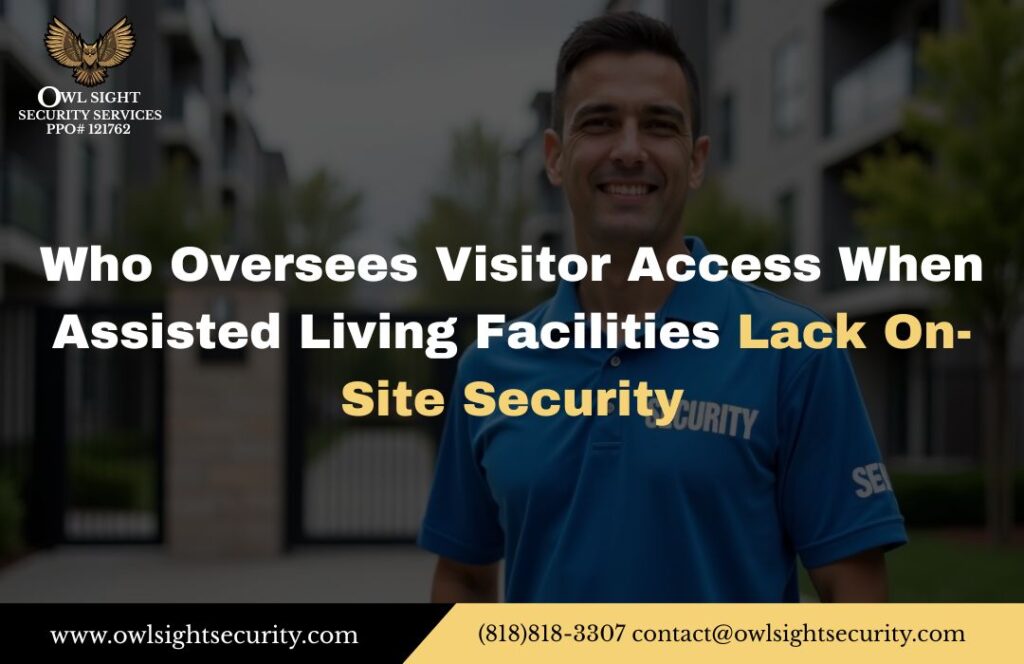
Visitor access becomes a significant concern when assisted living facilities operate without dedicated on-site security. Families, vendors, medical staff, and guests move through these environments daily, increasing the risk of unauthorized access. Many facilities rely on security guard services for assisted living facilities to address visitor access when assisted living facilities lack security and maintain controlled oversight.
When security coverage is absent, staff members often absorb access-related responsibilities. These duties fall outside their primary caregiving roles. Oversight gaps develop quickly under these conditions.
Front Desk Staff Often Become the First Line of Control
In facilities without security, front desk staff typically manage visitor access. They attempt to identify guests, answer questions, and monitor entry points. This responsibility adds pressure to already demanding roles.
Front desk teams are not trained to enforce reception desk security. They may hesitate to challenge unfamiliar individuals. This limitation increases risk.
Care Staff Are Forced to Monitor Access Informally
Caregivers often notice unfamiliar visitors while assisting residents. They may attempt to intervene or notify supervisors. These actions interrupt care responsibilities.
This informal approach lacks consistency. Visitor access becomes reactive rather than structured. Visitor access to assisted living facilities that lack adequate security often depends on chance observation.
Vendors and Contractors Increase Exposure
Assisted living facilities rely on vendors for maintenance, medical supplies, and services. Without security, vendors may move freely through the property. Verification processes often remain inconsistent.
Unverified access increases liability concerns. Staff may not know who is authorized. These gaps compound access risks.
Visiting Hours Become Difficult to Enforce
Facilities without security struggle to manage visiting hours. Guests may arrive early, stay late, or access restricted areas. Staff rarely have time to enforce policies consistently.
This lack of enforcement undermines resident safety and creates confusion among families and visitors. Oversight becomes unreliable.
Resident Safety Is Directly Impacted
Residents in assisted living environments may wander or become disoriented. Unmonitored visitor access increases the risk of elopement or unsafe interactions. Vulnerable residents require consistent oversight.
Without security, these risks go unmanaged. Staff cannot monitor access while providing care. Visitor access to assisted living facilities that lack adequate security directly affects resident well-being.
Liability and Compliance Risks Increase
Facilities remain responsible for maintaining a safe environment. Unauthorized access incidents can result in complaints or legal action. Documentation often falls short without security oversight.
Insurance providers may scrutinize these gaps. Compliance expectations increase as facilities grow. Structured access control reduces exposure.
Regional Considerations Affect Access Challenges
Facilities in Los Angeles experience higher visitor volume and service activity. Urban density increases access complexity. Oversight becomes more critical in these environments.
Locations in Long Beach and Pasadena face different operational patterns. Each area presents unique access challenges. Local awareness strengthens planning.
Professional Security Provides Clear Accountability
Dedicated security personnel assume responsibility for access control. Guards verify visitors, observe movement, and enforce policies consistently. Accountability becomes clear.
Facilities using professional security services benefit from structured oversight. Access management improves without burdening care staff. Safety outcomes strengthen.
Security Supports Staff and Resident Confidence
Security presence allows staff to focus on care rather than enforcement. Residents feel safer when oversight is visible. Families gain confidence in facility operations.
Owl Sight Security Services provides trained personnel experienced in assisted living environments. Their approach emphasizes observation, communication, and documentation. This structure supports safer daily operations.
Conclusion
When assisted living facilities lack on-site security, visitor access oversight becomes fragmented and inconsistent. Staff members absorb responsibilities they are not trained to manage. Understanding visitor access in assisted living facilities without security helps administrators identify where gaps exist.
Professional security restores structure and accountability. Facilities seeking consistent access control and improved safety can request a quote to evaluate appropriate coverage. Proactive oversight supports residents, staff, and families alike.