

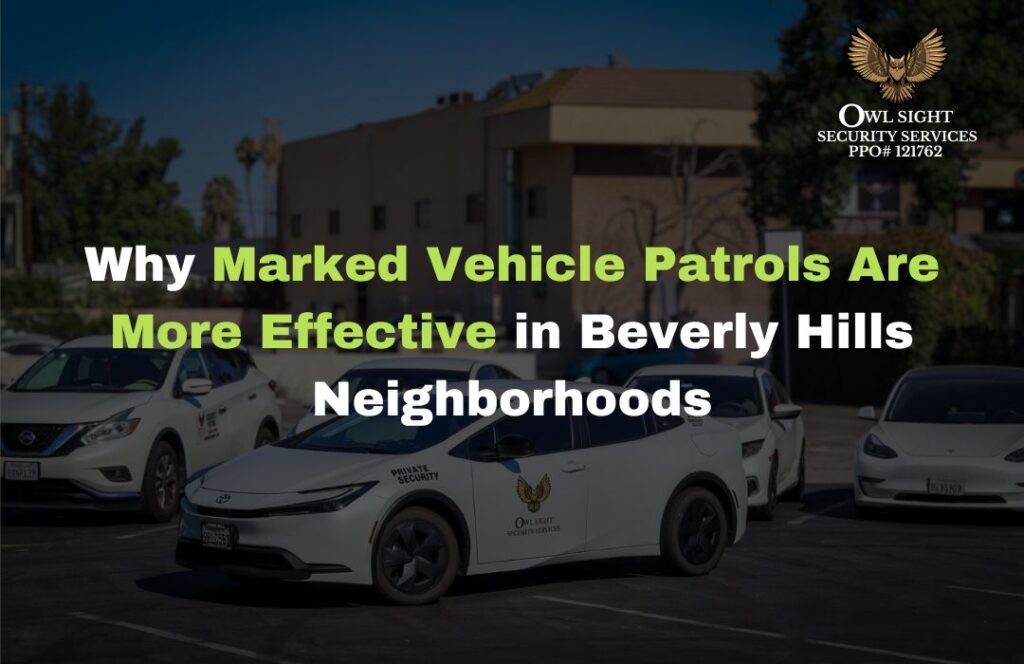
Neighborhoods rely on visibility and consistency to deter crime, especially during overnight hours and low-activity periods. When security presence is predictable and clearly identifiable, it discourages opportunistic behavior before incidents begin. This is why many residential communities use vehicle patrol security to maintain visible enforcement across streets, entrances, and shared areas without disrupting daily life.
Understanding why marked vehicle patrols are more effective in neighborhoods starts with recognizing how visibility, mobility, and rapid response work together to reduce risk.
Why Visibility Changes Criminal Behavior
Criminal activity in residential areas often depends on anonymity and time. Unmarked monitoring and remote systems may go unnoticed, which allows individuals to test boundaries without immediate consequence.
Marked patrol vehicles eliminate that uncertainty. When a patrol unit is clearly identified and regularly observed moving through a neighborhood, it signals oversight and increases the perceived risk of being caught. This visibility alone causes many offenders to abandon attempts before taking action.
Consistent presence shifts neighborhoods from reactive environments to deterrence-focused ones.
How Marked Patrols Cover More Ground Efficiently
Neighborhoods typically include multiple streets, parking areas, entrances, and shared spaces. Static security cannot cover all of these areas effectively without significant staffing.
Marked patrol vehicles allow security teams to move throughout the neighborhood, adjusting routes based on activity and time of day. Officers can check entrances, drive internal roads, and monitor problem areas without gaps in coverage.
This mobility is a major reason why marked vehicle patrols are more effective in neighborhoods than stationary monitoring alone.
Key Advantages of Marked Vehicle Patrols in Residential Areas
Marked patrols provide layered protection through presence, movement, and response.
Core advantages include:
- Visible deterrence that discourages suspicious behavior
- Rapid response to incidents or alarms
- Flexible patrol routes that reduce predictability
- Coverage of large residential areas without full-time on-site staffing
- Professional enforcement without disrupting residents
These advantages make patrols especially effective in neighborhoods with multiple access points or extended perimeters.
Why Patrol Presence Matters in Gated and Ungated Neighborhoods
Gated neighborhoods often assume gates alone provide protection, but internal streets, amenities, and secondary entrances still require oversight. Ungated neighborhoods face similar challenges due to the lack of defined access points.
Marked patrols support both environments by maintaining visibility throughout the property rather than focusing on a single location. In communities that already use gated community security, patrol vehicles reinforce access rules and monitor internal activity where gates cannot.
This layered approach strengthens overall neighborhood safety.
How Patrol Officers Respond Before Issues Escalate
Marked patrol officers do more than observe. They investigate suspicious behavior, check unsecured areas, and respond immediately when concerns arise.
Early intervention prevents minor issues from turning into repeat incidents. Officers can address loitering, unauthorized parking, and access violations before they lead to theft or vandalism.
This proactive response reinforces why marked vehicle patrols are more effective in neighborhoods that value prevention over after-the-fact reporting.
Integrating Patrols With Neighborhood Routines
Effective patrol programs align with neighborhood schedules and activity patterns. Officers learn when traffic increases, when residents return home, and when areas become quiet.
This awareness allows patrols to focus attention during vulnerable periods without interfering with daily routines. Residents benefit from protection without feeling monitored.
Clear communication between management and security teams ensures patrols adapt as conditions change.
Why Professional Patrol Services Make a Difference
Marked vehicle patrols require trained officers who understand residential environments and professional conduct. Poorly executed patrols can feel intrusive or inconsistent.
Professional providers emphasize visibility, courtesy, and accountability. Officers document activity, follow defined routes, and respond appropriately to concerns.
Owl Sight Security Services provides trained patrol officers who understand neighborhood dynamics, access control, and the power of visible deterrence. Their structured patrol strategies help communities maintain order and confidence without disruption.
Failing to understand why marked vehicle patrols are more effective in neighborhoods often results in underutilized security that reacts instead of prevents.
Frequently Asked Questions
Why are marked patrol vehicles more effective than unmarked vehicles?
Marked patrol vehicles are more effective because visible presence discourages criminal activity before it starts.
Do marked patrols work in both gated and ungated neighborhoods?
Marked patrols work in both environments by providing mobile oversight across streets, entrances, and shared areas.
How often do marked patrols drive through a neighborhood?
Patrol frequency depends on neighborhood size, risk level, and activity patterns and can be adjusted as needed.