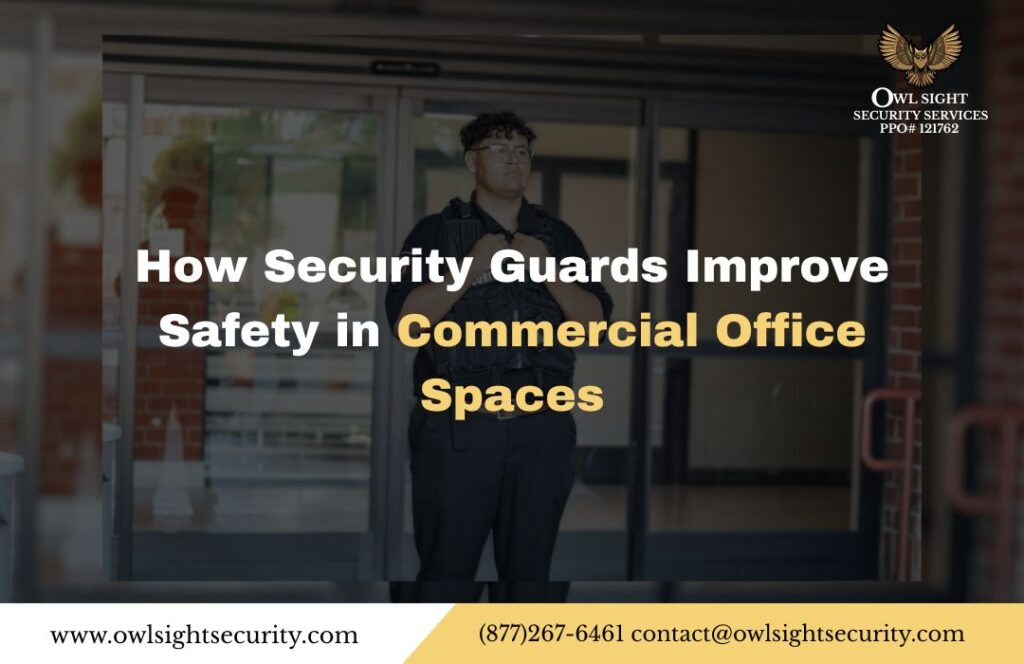
Understanding how security guards improve safety in commercial office spaces is something every property manager and business owner in Los Angeles should think about before an incident forces the conversation. Walk into almost any well-run commercial office building and you will notice something immediately. There is someone at the front who is paying attention. That presence alone changes the dynamic of the entire space before a single security protocol has even been activated.
Technology monitors. People respond. In an office environment where employees, clients, and vendors move through the building every single day, that distinction matters more than most people realize.
The Safety Challenges Commercial Office Spaces Face
Busy office buildings deal with a steady stream of people coming and going throughout the day. Employees, visitors, delivery personnel, and contractors all share the same entry points and common areas. That volume creates situations that are easy to overlook until something goes wrong.
Unauthorized individuals slipping through secured doors behind employees is more common than most building managers want to admit. Confrontations in lobbies or parking areas that involve no clear protocol for resolution. Packages are going missing. Vendors accessing floors they were never cleared to enter. These are not dramatic incidents in themselves, but they signal a safety gap that grows over time without a professional presence to close it.
That gap is exactly where office building security guards have their greatest impact. Not just during emergencies but in the everyday flow of a busy commercial environment.
How Security Guards Improve Safety Day to Day
Most people associate security guards with responding to emergencies. That is part of it. But the more significant contribution happens long before an emergency develops.
A trained guard at the entrance of an office building establishes accountability from the moment someone walks through the door. Visitors are verified. Access is controlled. Anyone who does not belong is identified early rather than discovered on a restricted floor twenty minutes later.
That level of active oversight changes behavior throughout the building. People act differently when they know someone trained and professional is paying attention. That shift in behavior is itself a form of safety improvement that no camera system or access card can replicate on its own.
Guards also handle situations that would otherwise fall to office staff who are not equipped to manage them. A difficult visitor. A confrontation in a common area. A vendor who arrived without proper clearance. These moments happen regularly in busy office environments. A trained guard handles them professionally and quickly, keeping the rest of the building focused and undisturbed.
Specific Ways Guards Improve Office Safety
For Employees
- Employees move through the building with greater confidence knowing trained personnel are present
- Uncomfortable or threatening situations are handled by someone equipped to manage them
- After-hours workers and late-night staff have a professional presence watching over the building
- A safer environment reduces distraction and supports focus during the working day
For Building Management
- Access points are monitored consistently rather than relying solely on technology
- Incidents are documented accurately giving management a clear record of activity
- Liability exposure is reduced through professional oversight of common areas and entry points
- Building reputation improves when tenants and visitors experience a well-managed environment
The After-Hours Safety Gap
Office buildings do not stop being a safety concern when employees leave for the day. After-hours periods carry their own risks. Cleaning crews, maintenance contractors, and vendors access the building with less structured oversight than during peak hours.
A guard covering evening and weekend shifts maintains the same standard of access control that daytime operations require. Credentials are verified. The building is monitored. Any situation that develops is handled immediately rather than discovered the following morning.
That continuity of coverage is one of the most practical ways security guards improve safety in commercial office spaces. Safety does not run on a nine to five schedule and neither should the security presence protecting it.
Owl Sight Security Services provides professional coverage across all operational hours for commercial office properties throughout Los Angeles. Their guards bring the same level of professionalism to an early morning shift as they do to a late-night one.
Frequently Asked Questions
Do security guards improve safety in smaller office buildings or just large ones?
Building size is not the determining factor. A smaller office building with high visitor volume, multiple tenants, or a history of access control issues benefits just as much from a professional security presence as a large commercial tower. The right coverage is matched to the specific demands of the building.
How do guards handle sensitive situations without disrupting the office environment?
Professional guards are trained to manage difficult interactions with discretion and composure. De-escalation, calm communication, and quick resolution are the standards experienced guards bring to these moments. The goal is always to handle the situation without creating a disruption that affects the rest of the building.
What is the difference between a security guard and an access control system in an office building?
An access control system manages entry through technology. A security guard manages entry through trained human judgment. Guards identify situations that technology cannot, respond in real time, and make decisions based on context. The two work best together rather than as substitutes for each other.
How do security guards handle after-hours access for cleaning and maintenance crews?
Guards verify credentials for all personnel accessing the building outside normal hours, log arrivals and departures, and monitor activity throughout their shift. Any access that falls outside approved protocols is flagged and addressed immediately.