

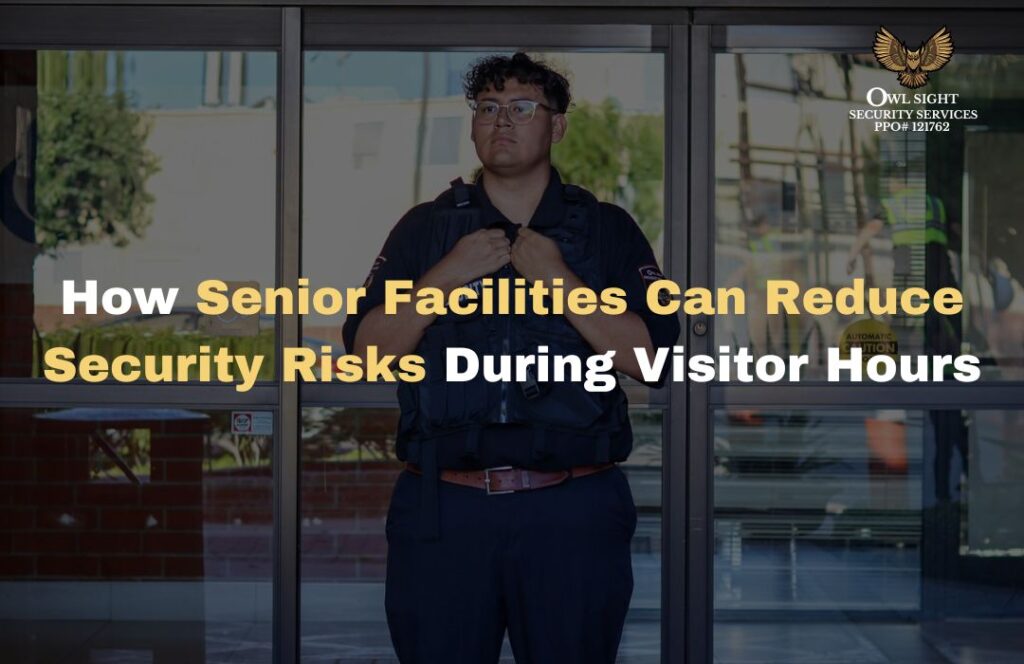
Visitor hours are an essential part of daily life in senior and assisted living facilities, but they also introduce periods of increased exposure. Friends, family members, vendors, and service providers move through the building in greater numbers, making it harder to distinguish who belongs and who does not. This is why many operators rely on security guards for assisted living facilities to maintain controlled access, observe activity, and address issues before they affect residents.
Understanding how senior facilities can reduce security risks during visitor hours requires balancing openness with oversight so residents remain safe without feeling restricted.
Why Visitor Hours Increase Security Exposure
Visitor hours change the normal rhythm of a senior facility. Entry points become busier, staff attention shifts toward resident care, and unfamiliar individuals circulate through common areas.
This environment creates opportunities for unauthorized access, wandering, and theft, especially when staff assume visitors are legitimate. Even well-intentioned guests may unintentionally enter restricted areas or disrupt routines.
Risk increases not because visitors are unwelcome, but because volume and movement make monitoring more complex.
How Uncontrolled Access Affects Resident Safety
Access control is critical in senior facilities because residents may have mobility limitations, cognitive impairments, or medical vulnerabilities. Uncontrolled access increases the risk of elopement, confusion, and exposure to individuals who should not be present.
When entrances are loosely monitored, visitors may tailgate into secure areas or wander beyond approved spaces. Without clear enforcement, boundaries blur and accountability weakens.
This breakdown highlights how senior facilities can reduce security risks during visitor hours by ensuring access rules remain consistent even during peak periods.
Practical Measures Facilities Can Implement During Visiting Hours
Facilities that plan for visitor traffic experience fewer incidents and smoother operations.
Effective measures include:
- Monitoring entrances during designated visiting times
- Verifying visitors and directing them appropriately
- Limiting access to resident-only or care-restricted areas
- Observing interactions in common spaces
- Addressing concerns immediately rather than after hours
These actions support resident safety while preserving a welcoming environment.
How Professional Security Guards Support Staff and Residents
Professional security guards allow care staff to focus on residents without assuming enforcement duties. Guards monitor behavior, respond to concerns, and intervene early when something feels out of place.
Their presence reassures residents and visitors alike by providing clear authority and direction. Guards also assist with de-escalation, lost visitors, and policy reminders without disrupting care routines.
This support is central to how senior facilities can reduce security risks during visitor hours, because oversight remains continuous even when activity increases.
Why Visibility and Consistency Reduce Incidents
Security works best when it is predictable and visible. When visitors see consistent enforcement, they are more likely to follow rules and less likely to test boundaries.
Consistency also reassures residents, especially those sensitive to unfamiliar faces or changes in routine. A calm, professional presence stabilizes the environment rather than creating tension.
Visibility discourages misconduct and reinforces safety expectations throughout the facility.
Coordinating Security With Visitor Policies
Security must align with facility policies regarding visiting hours, guest sign-in, and restricted areas. Guards should understand these rules clearly and apply them evenly.
Coordination ensures visitors receive accurate guidance while staff avoid mixed messaging. Clear procedures reduce confusion and help visitors comply without frustration.
Policy-driven enforcement strengthens daily operations.
Why Visitor-Focused Security Protects Facility Operations
Security incidents during visiting hours affect more than safety. They disrupt care, create stress for residents, and increase liability for operators.
Proactive security prevents small issues from becoming serious events. It also demonstrates diligence to families, regulators, and insurers.
Owl Sight Security Services provides trained professionals experienced in senior living environments, access control, and resident-focused interaction. Their structured approach helps facilities manage visitor activity while maintaining a respectful, comfortable atmosphere.
Ignoring how senior facilities can reduce security risks during visitor hours often leads to preventable incidents and operational strain.
Frequently Asked Questions
Why are visitor hours a higher-risk period for senior facilities?
Visitor hours increase foot traffic and introduce unfamiliar individuals, which makes monitoring more difficult.
Should visitors be monitored even in common areas?
Yes, common areas still require observation to ensure residents remain safe and boundaries are respected.
Do security guards interfere with resident comfort?
Professional guards operate discreetly and support a calm environment rather than disrupting it.