

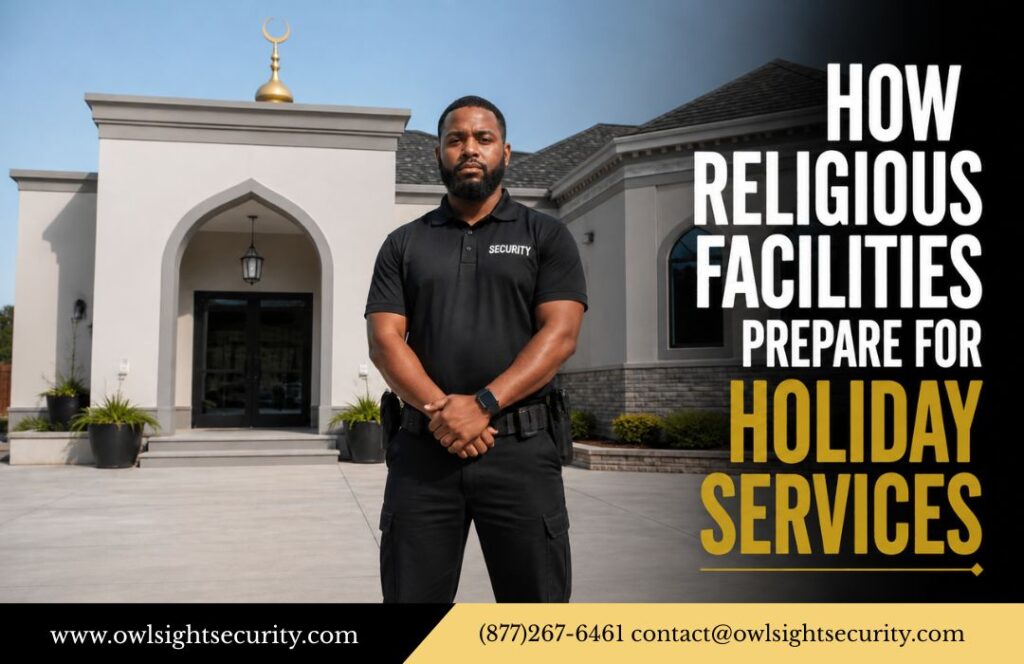
Religious organizations often experience some of their largest gatherings during the holiday season. Services that normally attract a regular congregation may bring in additional families, visitors, volunteers, and community members. Understanding how religious facilities prepare for holiday services involves more than arranging seating and updating service schedules. Religious leaders and property managers also need to consider parking, building capacity, visitor flow, event schedules, and the increased activity that comes with larger gatherings. Many religious facilities include professional security planning as part of their preparation for these busy periods.
Holiday services can also involve several events occurring within a short period. A morning service may be followed by a community gathering, meal, children’s program, or evening celebration. These changes can significantly increase activity around the property. Companies like Owl Sight Security Services understand that preparing for these occasions requires an organized approach that considers how the entire property will be used.
Holiday Services Bring More Visitors to Religious Properties
One reason how religious facilities prepare for holiday services is an important consideration is the increase in attendance that often occurs during major holidays. People who do not regularly attend weekly services may visit during holidays, while regular members may also bring family members and guests.
This increased attendance can change the way people move through the property. Entrances may become crowded, parking spaces may fill quickly, and common areas may experience more activity than they do during regular services. Preparing for these changes helps organizations avoid unnecessary confusion when large groups arrive at the same time.
Holiday attendance can also create challenges for properties with limited parking. When nearby streets and parking areas become crowded, visitors may look for alternative spaces or arrive earlier than expected. Reviewing parking arrangements before the holiday period allows facility managers to identify potential congestion and communicate available options to attendees.
The building itself may also experience higher occupancy. Larger crowds can place additional pressure on entrances, hallways, restrooms, gathering spaces, and seating areas. Planning for increased attendance helps the organization maintain an orderly environment while allowing visitors to participate comfortably.
Holiday Events Require Additional Planning
Many holiday services involve more than the scheduled worship service. Religious organizations may host meals, performances, children’s activities, charitable programs, concerts, or community gatherings around the same time. These activities can bring different groups onto the property throughout the day.
Areas That May Experience Increased Activity
Holiday preparations often involve reviewing:
- Main entrances and secondary entrances
- Parking areas and pedestrian walkways
- Children’s activity spaces
- Fellowship halls and community rooms
- Service and event areas
- Visitor gathering locations
- Areas used for food distribution
- Spaces used by volunteers and event organizers
Larger Gatherings Require Thoughtful Property Planning
Holiday services can make a familiar property feel very different from its normal routine. A building that comfortably accommodates regular attendance may experience significantly more traffic during major holiday gatherings. This makes advance planning particularly important for organizations that expect a substantial increase in visitors.
Parking is often one of the first areas affected. When available spaces fill quickly, vehicles may begin arriving at different entrances or parking in areas that are not normally used for attendees. Clear communication about parking arrangements can help reduce confusion and keep pedestrian movement more organized.
Visitor flow is another consideration. When a large number of people arrive within a short period, the main entrance may become crowded. Religious organizations can review whether additional entry points should be opened and whether signs are needed to direct visitors toward services, restrooms, children’s programs, or other areas.
Holiday events can also affect surrounding neighborhoods. Increased traffic may extend beyond the property itself, particularly when the facility is located in a residential area or near busy streets. Planning for expected attendance gives facility managers an opportunity to consider how the event may affect nearby roads, parking, and pedestrian movement.
These considerations are especially relevant for organizations that host several holiday events throughout the year. Reviewing what worked during previous gatherings can help leaders make more informed preparations for future services.
Preparing Early Helps Religious Organizations Manage Busy Seasons
The most effective preparation begins well before the holiday service takes place. Religious organizations can review attendance expectations, property conditions, event schedules, parking arrangements, and building access requirements before the first visitors arrive.
Planning early also gives facility managers time to address issues that may otherwise become difficult to resolve at the last minute. Lighting problems, damaged gates, crowded parking areas, unclear signage, and changes to event schedules can all be addressed before attendance increases.
Organizations that work with Owl Sight Security Services can incorporate professional security planning into their preparation for larger gatherings. Reviewing the property before a major service allows organizations to identify areas that may require additional attention during periods of increased activity.
Holiday services are important occasions for congregations and their surrounding communities. Preparing for larger attendance does not require changing the welcoming nature of a religious organization. Instead, thoughtful planning helps ensure that visitors can arrive, participate in services, and leave the property in an organized manner.
Frequently Asked Questions
Why do religious facilities need additional planning during holidays?
Holiday services often attract more visitors than regular weekly services, which can increase traffic, parking demand, and activity throughout the property. Additional planning helps organizations prepare for these temporary changes.
What areas should religious facilities review before a holiday service?
Property managers should review entrances, parking areas, pedestrian walkways, gathering spaces, event rooms, and other locations that may experience increased activity during the service.
Do holiday services affect parking requirements?
Yes. Increased attendance can cause available parking spaces to fill quickly, especially when multiple services or events take place on the same day. Reviewing parking arrangements beforehand can help reduce congestion.
How can religious organizations prepare for multiple holiday events?
Organizations can review event schedules, expected attendance, building usage, parking arrangements, and visitor flow before the holiday period begins. Coordinating these details early helps reduce confusion when several activities occur on the same day.