

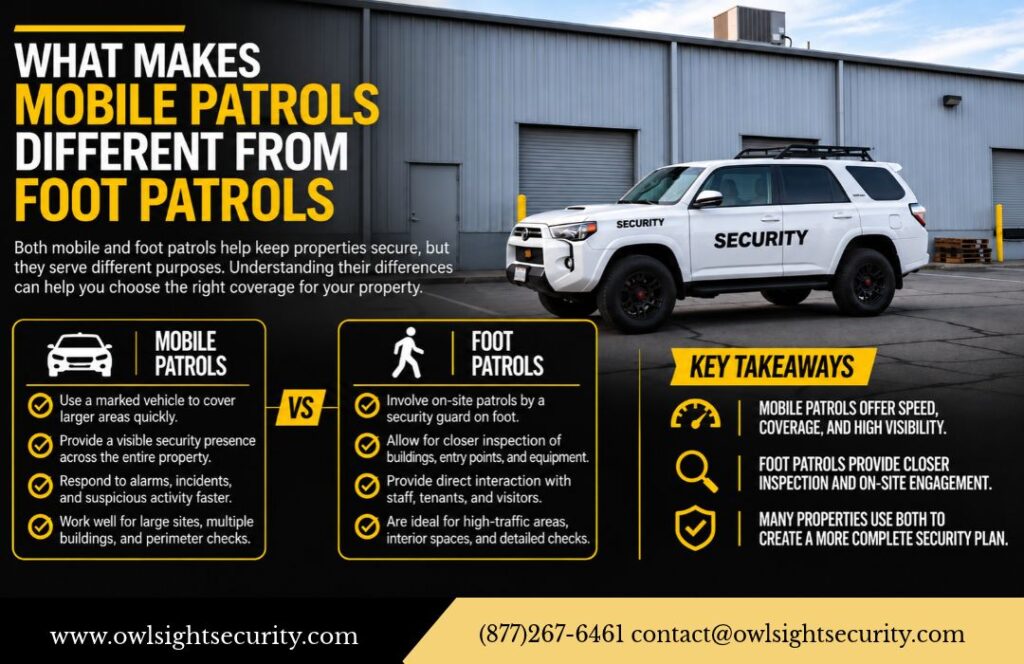
What makes mobile patrols different from foot patrols comes down to how security personnel move throughout a property and monitor potential security concerns. Both approaches provide a visible security presence, but they serve different purposes depending on the property’s layout, size, and operating conditions. Understanding these differences helps property managers determine which patrol method is appropriate for their location.
Marked mobile security patrols use designated security vehicles to travel between buildings, entrances, parking areas, and perimeter locations. Foot patrols involve officers walking through designated areas to observe conditions more closely. Each approach offers a different way to monitor property activity and address security concerns.
Coverage and Property Size
Mobile patrols are particularly useful for properties with large grounds, multiple buildings, or extensive parking areas. Traveling by vehicle allows officers to cover greater distances during a patrol and move between designated locations more efficiently. This can be valuable at industrial facilities where equipment, exterior boundaries, and access points may be spread across a large area.
Foot patrols are generally more practical for smaller or concentrated areas where closer observation is important. Walking allows officers to inspect locations that vehicles cannot easily access, including building entrances, pedestrian pathways, and interior common areas. The property’s layout often determines which method provides more suitable coverage.
Visibility and Patrol Presence
A marked security vehicle creates a recognizable presence that can be seen by employees, visitors, and individuals approaching the property. Its movement throughout the site can help discourage unauthorized activity, particularly around parking areas, exterior boundaries, and vehicle entrances. Regular vehicle patrols can also help maintain visibility during periods when fewer employees are present.
Foot patrols provide a different type of presence because officers move directly through the property. Walking allows closer observation of doors, windows, equipment, and other physical conditions that may require attention. This approach can be especially useful in warehouses where interior aisles, loading areas, and pedestrian spaces require closer inspection.
Observation and Property Access
Mobile patrols allow officers to monitor several locations during a single patrol route. However, some areas may require officers to leave their vehicles to inspect conditions more closely. A vehicle can provide efficient transportation across a property, but it cannot replace direct observation in spaces that require physical inspection.
Foot patrols allow officers to examine areas at closer range and notice details that may be difficult to identify from a moving vehicle. These observations can include unsecured doors, damaged fencing, unusual activity, or property conditions that require reporting. Combining both methods can provide broader coverage when a property has a mixture of open grounds and enclosed spaces.
Selecting the Appropriate Patrol Method
The choice between mobile and foot patrols should reflect the property’s size, layout, operating hours, and security concerns. Large commercial properties may benefit from vehicle coverage, while smaller buildings or concentrated areas may require more direct observation. Some locations may benefit from a combination of both methods to address different parts of the property.
Owl Sight Security Services provides marked vehicle patrol services for properties that require mobile security coverage. Reviewing the property’s access points, vulnerable areas, and operating conditions helps determine an appropriate patrol arrangement. Establishing clear patrol expectations also helps ensure that coverage aligns with the property’s specific requirements.
Frequently Asked Questions
What is the main difference between mobile patrols and foot patrols?
Mobile patrols use security vehicles to travel throughout a property, while foot patrols involve officers walking through designated areas. The main difference is how officers move between locations and observe property conditions.
Are mobile patrols better for large properties?
Mobile patrols can be more practical for large properties because vehicles allow officers to travel between distant buildings, parking areas, and perimeter locations. The appropriate coverage still depends on the property’s layout and security concerns.
When are foot patrols more effective?
Foot patrols are useful in areas that require close observation or cannot be accessed easily by vehicle. Examples include interior hallways, warehouse aisles, building entrances, and pedestrian walkways.
Do marked mobile patrols provide a visible security presence?
Yes. Marked security vehicles create a recognizable presence as they travel throughout a property. Their visibility can help discourage unauthorized activity and make security coverage more noticeable.