

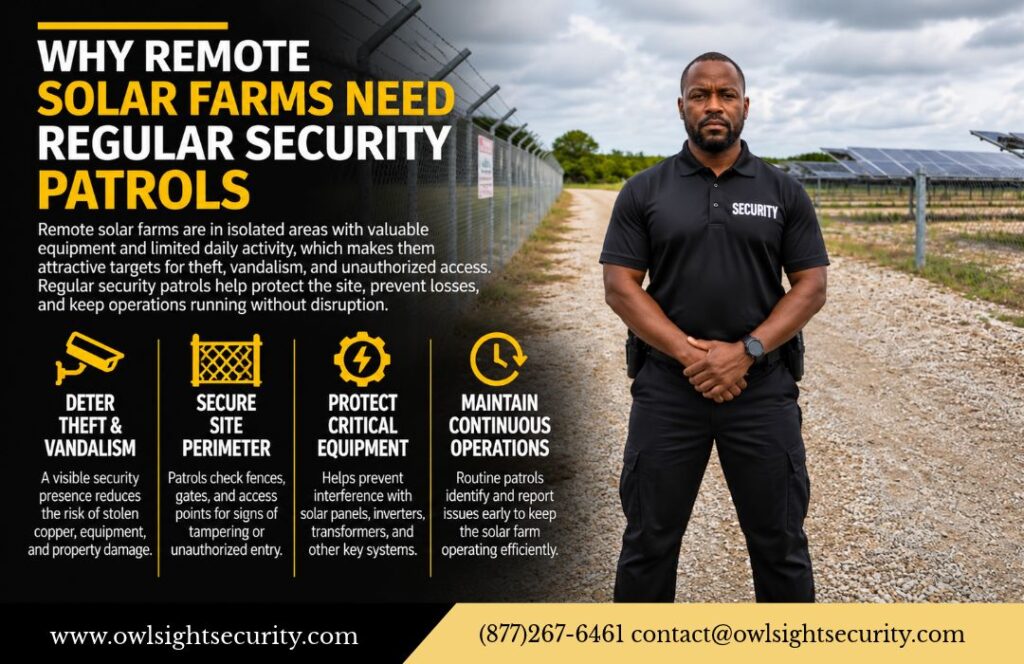
Why remote solar farms need regular security patrols comes down to the challenges of protecting large properties with limited daily activity and distant access points. These facilities often operate outside populated areas, where unauthorized visitors, equipment theft, and property damage can go unnoticed. Regular patrols help identify suspicious activity and maintain visibility across vulnerable sections of the site.
Security guards for solar farms provide a visible presence around equipment areas, access roads, perimeter fencing, and other critical locations. Because solar facilities can cover hundreds of acres, security planning must account for distance, terrain, and areas that receive little routine attention. Consistent patrol coverage helps address these challenges before minor security concerns develop into larger problems.
Remote Locations Create Additional Security Challenges
Solar farms often occupy rural or undeveloped land where nearby businesses, residents, and regular vehicle traffic may be limited. This isolation can make suspicious activity less noticeable, particularly during overnight hours or periods when maintenance crews are absent. Individuals entering the property may have fewer opportunities to attract attention from people outside the facility.
Distance also makes it difficult for management to observe every section of a solar installation. Equipment storage areas, electrical infrastructure, access gates, and perimeter boundaries may sit far apart. Without regular inspections, damaged fencing, unsecured gates, or unusual vehicle activity can remain unnoticed. A consistent patrol schedule helps provide coverage across these separated locations.
Equipment Theft and Property Damage Require Consistent Monitoring
Solar farms contain valuable equipment that can attract thieves, including copper wiring, electrical components, tools, and maintenance materials. Unauthorized access can also expose sensitive infrastructure to tampering or damage. Even a relatively small incident may interrupt operations and require costly repairs.
Regular patrols help management maintain awareness of conditions throughout the property. Officers can observe changes around equipment areas, inspect visible security concerns, and report suspicious activity. A structured patrol route also helps prevent less frequently visited sections from receiving little or no attention.
Areas That Require Regular Security Checks
Patrol coverage should account for the locations where unauthorized access or property damage could create operational problems. Depending on the facility’s layout, these areas may include:
- Perimeter fencing, gates, and remote access roads.
- Inverter stations, transformers, and electrical equipment.
- Equipment storage areas and maintenance buildings.
- Sections with damaged fencing or limited visibility.
- Locations where contractors, delivery vehicles, or service crews enter.
Documenting these inspections helps management identify recurring concerns and determine whether certain areas require additional attention. Patrol routes should also change when construction, maintenance, or site conditions create new vulnerabilities.
Vehicle Patrols and Golf Cart Patrols Improve Site Coverage
Large solar installations require practical ways to move between distant sections of the property. Vehicle patrol coverage allows officers to travel along access roads, inspect perimeter routes, and respond to concerns across wide areas. Marked security vehicles also create a visible presence that can discourage unauthorized individuals from approaching the facility.
Some solar farms have internal pathways where larger vehicles may not provide convenient access. Golf cart patrols can help officers move through designated areas between solar panel rows, equipment locations, and maintenance sections. The appropriate patrol method depends on road conditions, terrain, property size, and site-specific restrictions. Combining different patrol methods can help provide more practical coverage across facilities with varied layouts.
Maintaining Security at Vacant and Inactive Solar Facilities
Some solar properties experience periods of reduced activity during construction, maintenance, equipment upgrades, or operational transitions. A vacant or temporarily inactive facility may have fewer employees and contractors present to notice unauthorized entry. These conditions can increase the importance of regular inspections and documented patrol activity.
Owl Sight Security Services provides security coverage for properties that require consistent monitoring, including remote facilities with extensive exterior areas. Establishing designated patrol routes, inspection points, and reporting procedures helps management maintain visibility even when regular site activity decreases. Electronic checkpoint reporting can also help document completed patrols and identify areas that require follow-up.
Frequently Asked Questions
Why do remote solar farms need regular security patrols?
Remote solar farms often have large perimeters, limited daily activity, and valuable electrical equipment. Regular patrols help identify unauthorized access, suspicious activity, and property damage before these issues create larger operational problems.
What security risks affect solar farms?
Common risks include copper and equipment theft, vandalism, unauthorized entry, damaged fencing, and tampering with electrical infrastructure. Remote locations can make these incidents harder to detect without consistent monitoring.
Are vehicle patrols effective for solar farms?
Yes. Vehicle patrols help officers cover long access roads, perimeter boundaries, and distant sections of large solar properties. They also provide a visible security presence throughout the facility.
Do vacant solar farms still require security?
Yes. Reduced activity can leave equipment, access points, and perimeter areas with less routine observation. Regular security patrols help maintain coverage during construction delays, maintenance periods, and temporary shutdowns.